
“The right model follows decision volume and brand risk, not the lowest quote. What the Association of National Advertisers' adoption series, McKinsey's 2018 study and the Coca-Cola in-house report actually tell a buyer.
Decide by decision volume, not by headcount
The choice between an agency, a freelancer and an in-house team is decided by decision volume and brand risk, not by the cheapest quote.
The Association of National Advertisers found that 82 percent of its members had an in-house agency in 2023, which makes this a design decision rather than a default setting.
Three models, three different risks
All three models buy the same hours of craft, and they place the risk in different rooms. An agency brings senior judgement and a bench you did not have to recruit, plus a coordination cost that never appears on its invoice. A freelancer brings speed and a calendar with a single point of failure. An in-house team brings proximity and a fixed cost base that has to be fed every month, whether the work is there or not.
The wrong question is which model is cheapest, because no primary measurement supports the belief that one of them is. The measurable question is which model survives your worst month: a launch, a brand refresh and a board deadline arriving in the same fortnight. Budgets describe what you can afford to start. Decision volume describes what you can keep running.
In-house adoption, asked the same way for fifteen years
The Association of National Advertisers has asked its members the same question across four editions, and the direction has not once reversed. The figures below are the share of members reporting an in-house agency.
82percent
Members with an in-house agency in 2023
Association of National Advertisers, triennial survey series.
78percent
The same measure in 2018
Association of National Advertisers.
58percent
The same measure in 2013
Association of National Advertisers.
42percent
The same measure in 2008
Association of National Advertisers.
Read the series as a description of the market, not as advice. Rising adoption says that in-house capacity has become normal, not that it is right for a team of fifteen people with one product.
Three paths, and who each one suits
Hire an agency
Several audiences, regulated surfaces and a launch that has to hold up under scrutiny.
Hire a freelancer
One product, one decision-maker and demand that arrives in bursts rather than waves.
Build in-house
A steady stream of decisions, a category that moves weekly and a leader who can hire and manage.
An agency earns its fee when the work must survive more than one audience and more than one supplier. You are buying a structure that absorbs contradiction: reviews, versions, a decision log and a named approver. Price the coordination honestly, because it is the part you will manage. The questions that separate a studio from a shop are covered in how to choose a design agency.
A freelancer is one person’s calendar, and that is the whole model. The Bureau of Labor Statistics counted a United States workforce of 253,100 graphic designers in 2025, with 20 percent of them self-employed, so the market is deep enough to find specialists. Check continuity the way you check style: how a fortnight of illness is handled, who holds the files, and what happens when a larger client appears.
In-house is a management commitment with a monthly invoice. You are buying proximity and speed on decisions you take all year, and you are paying for recruiting, tooling and idle weeks. 82 percent of Association of National Advertisers members reported an in-house agency in 2023 — a fact about the market, not a business case for your team. Write the case from your own decision volume.
The candid report from inside Coca-Cola
The most useful public document about in-house teams is a company admitting difficulty. Digiday reported on 27 May 2022 that Coca-Cola’s in-house StudioX was “still very much a work in progress” two years in, naming hidden costs, logistical hurdles and “political flashpoints” as the pitfalls. That is one company’s experience, published by a named outlet, and it is worth more than any vendor survey of the model.
The belief that in-house is automatically cheaper has no primary measurement behind it; what exists is a documented account of costs that were not in the plan. Build the case from decision volume and the monthly cost base, then treat every claim of automatic saving as unproven until someone shows the ledger.
What the in-house report said in one line
Even the biggest and most lauded advertisers struggle with moving more marketing in-house.
What McKinsey measured, and what the two-to-one line gets wrong
McKinsey tracked 300 listed companies over five years and published the result on 25 October 2018: top-quartile scores on its Design Index correlated with 32 percentage points higher revenue growth and 56 points higher shareholder returns. A correlation across five years and 300 companies is a serious finding, and it is not a promise about your next quarter.
The popular claim that design-led companies outperform two-to-one as a rule is a different animal. It merges the McKinsey correlation with the Design Management Institute’s 2015 Design Value Index, which reported a 211 percent ten-year return against the S&P 500. Two studies, two methods, two windows — the sentence worth keeping is the one that names the source, the sample and the year, and neither study tells you whether to hire a studio or a designer.
Compare the three models on what breaks
A comparison only helps if it names the failure, not the feature. Each model below breaks somewhere predictable, and the evidence column is where you can test the answer.
| Model | What you are buying | Where it fails first | Evidence to check |
|---|---|---|---|
| Agency | Senior judgement and a bench you did not have to recruit | Coordination when two suppliers touch the same brand | The team sheet and the change-of-control clause |
| Freelancer | One experienced person’s full attention | Continuity when that person takes a second client | Calendar, file custody, and who owns the masters |
| In-house | Proximity and a cost base you control directly | Hiring and management load when demand is uneven | Your own decision volume over the past twelve months |
The freelance market in numbers
Self-employment in design is a large market, not an exception. The Bureau of Labor Statistics counted a United States workforce of 253,100 graphic designers in 2025, with 20 percent of them self-employed, and projects a 2 percent decline in that workforce by 2035. A freelancer who is available this quarter is not a promise of availability in year three.
Wages set the floor under every rate you will be quoted. Median United States pay in May 2025 was 62,960 dollars for graphic designers and 114,850 dollars for art directors, against 50,980 dollars across all occupations. A freelancer’s day rate has to clear those numbers, their own overheads and the weeks they are not working. A rate that ignores all three is a rate that will not last.
Five questions that settle it faster than a budget
How many decisions does the work create each month?
Count the requests that came through last quarter, not the ones you hope for next year. A volume that sustains one person two days a week is a freelance conversation; a volume that fills one person every day is a hiring conversation with a job description attached.
What happens in a launch month?
Launch months break every model at once, and the opening fortnight decides most of the outcome. A studio that names a decision owner before it names an idea is doing the work in the order that survives a deadline, which is what the first two weeks are for.
The sequence is described in what the best design agencies do in the first two weeks.
Who absorbs coordination when two suppliers touch one brand?
Every extra supplier adds a version of the brand. Either the model includes someone whose job is arbitrating between them, or that job lands on the busiest person in your organisation.
Can you hire and manage this work?
An in-house team needs a manager, a plan and a cost base that survives quiet months. Median art director pay in May 2025 was 114,850 dollars in the United States, before any of the overheads that turn a salary into a department.
Why you cannot copy what a famous in-house team did
Case studies naming Blinkist or Airbnb as proof of the in-house model circulate widely, and no primary publication with outcomes could be found for either. Without a published measurement, the story is marketing for a decision that was probably made for other reasons.
What maturity research can still tell you
InVision’s design maturity study surveyed more than 2,200 organisations, and it also shows how fragile this genre of evidence is: the company has shut down, and only archived copies of “The New Design Frontier” remain. A study of that size becomes uncitable the moment its host disappears.
Treat maturity scoring as a conversation tool, not a procurement instrument. It can tell a leadership team roughly where it sits on a curve. It cannot tell you whether the next twelve months of work belong with an agency, a freelancer or a team you have not hired yet — that answer comes from your own decision volume.
Where capacity is tested
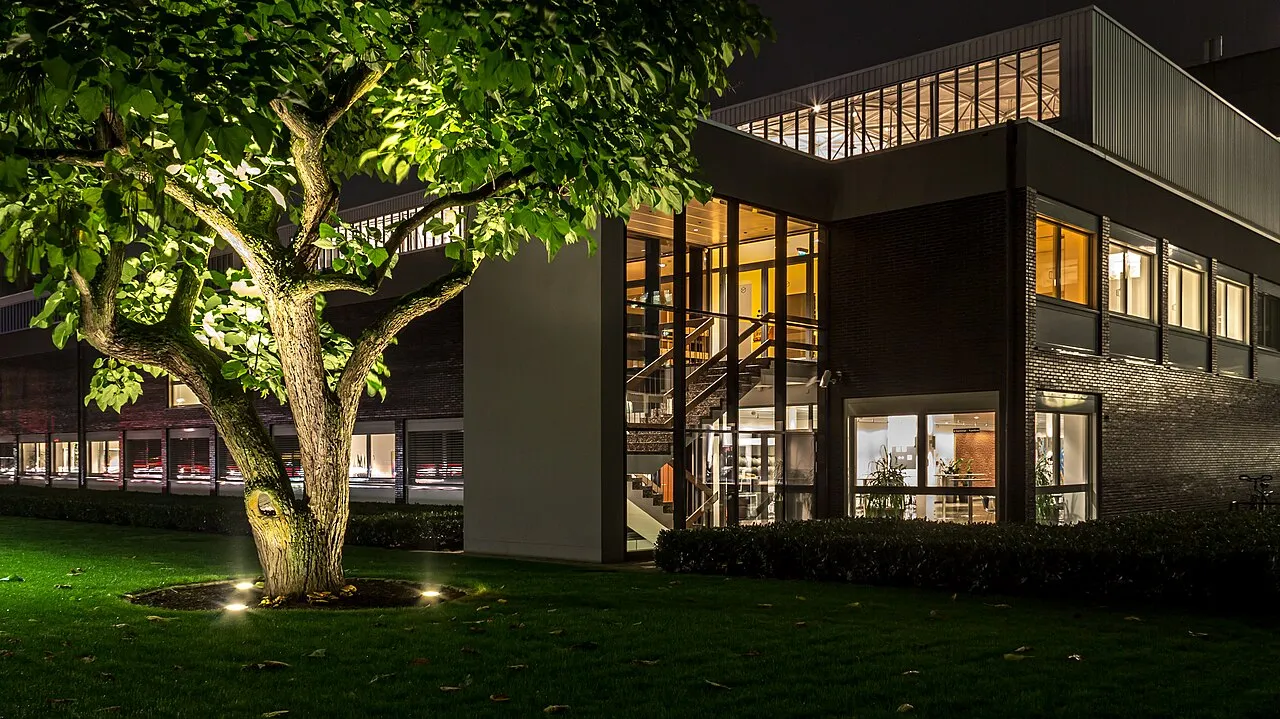
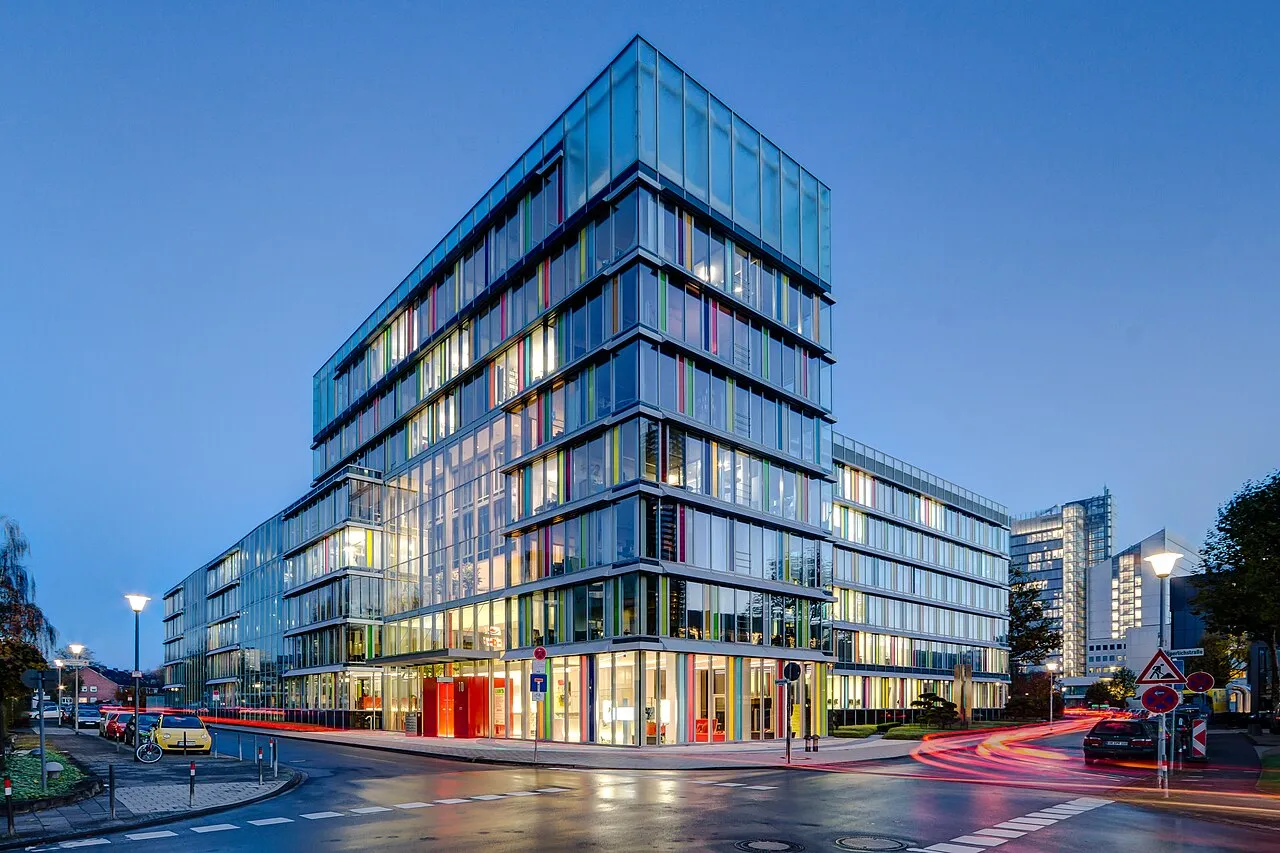
Capacity is tested in ordinary places: an office with a brand to run, a department that has to answer for next quarter, a building that carries a name every day. The photographs below are client organisations, which is where every model choice eventually lands.
What to do with this on Monday
- Count last quarter’s design requests before you compare quotes.Decision volume is the input that separates the three models; a budget only sets the ceiling.
- Write the launch month into the comparison.Whichever model you pick, it meets its hardest test when three deadlines land together.
- Ask who arbitrates between suppliers.Each additional supplier adds a version of the brand, and someone has to own that work.
- Use the wage floor to sanity-check a freelancer’s rate.Median United States pay in May 2025 was 62,960 dollars for graphic designers and 114,850 for art directors, before overheads.
- Demand the in-house business case in numbers, not slogans.The Association of National Advertisers reported 82 percent adoption in 2023; adoption is not a budget model.
- Ignore adoption stories with no published outcome.No primary source could be found for the widely repeated in-house case studies; a measurement beats a narrative.
Sources
- In-house agencies continue to rise — Association of National Advertisers, 2023
- The business value of design — McKinsey, 25 October 2018
- Graphic Designers — Occupational Outlook Handbook, US Bureau of Labor Statistics, May 2025
- Still getting started: Coca-Cola's candid progress report on its in-house plan — Digiday, 27 May 2022
- The 2015 Design Value Index results and commentary — Design Management Institute, 2015
- The New Design Frontier — InVision, 2019 (archived PDF; InVision has since shut down)