
“A shortlist is decided by how a studio runs a project, not by how its portfolio looks. Twelve questions on staffing, review, versioning and accountability, plus the artefacts to request instead of a pitch.
Test the process, not the portfolio
What a studio has already made matters less than how it runs a project you have not started yet.
The 2022 Pitch Positive Pledge, written by the Incorporated Society of British Advertisers and the Institute of Practitioners in Advertising, gives you the test: three commitments a studio either accepts or quietly avoids.
Why the portfolio cannot carry the decision
Portfolios are edited for the decision you are about to take, so they flatter every studio on your list. A deck with three tower launches proves the studio can typeset an architectural photograph. It says almost nothing about who corrects a mistake at eleven at night before a launch, who signs the artwork, or what happens when the person who presented the work has left the team by the next quarter.
Ask about the machinery instead. How is a project staffed, reviewed, versioned and measured, and who answers when a date slips? A studio that cannot answer those four in specifics is not necessarily hiding a weakness; it may never have been asked. The selection stage is the one moment when the answers are still cheap to obtain.
Twelve questions, in four sets
Twelve questions cover the four areas that decide whether a studio can carry a project: staffing, review, versioning and accountability. Each set takes minutes to read and years to regret if it is skipped.
Who draws, and who stays
Ask for a team sheet with names, roles and the weeks each person is committed, then test it against the contract rather than the meeting. Pentagram’s own copy states that its 23 partners are all practising designers who serve as the primary contact for every client, and that the studio has traded since 1972 — a company claim, not a verified fact. Read the promise as a claim to be written into the agreement: which partner, for how many days, and who replaces that person if they leave.
How a review ends
How many review cycles are included, who is in the room, and what does a review produce? A review that ends without a written decision is a meeting. Ask to see how a rejected route was recorded on a past project. The record of what was cut and why is the only defence when a director asks, in year two, why the brand no longer does something it used to do.
Where the files live
Who holds the masters, how are versions named, and what happens to a credit when the studio changes its name? DesignStudio relaunched as Further on 16 September 2025, and older case studies still carry the old name, as Design Week reported. File custody and naming rules outlast any brand refresh. Ask for both in writing before the first invoice, not after the first disagreement.
Who answers when a date slips
Ownership moves, and the contract should say what survives. Work & Co states it joined Accenture Song in 2024; Wolff Olins has been part of Omnicom since 2001 — both company claims. Ask for a named approver on your side, a named owner on theirs, and a change-of-control clause that states what continues after a sale or merger. The practical red flags that show up in a pitch are collected in red flags in agency pitches.
What a strong answer sounds like
An answer you can hold to
- A team sheet with names, roles and weeks attached, given before the contract
- A review cycle that ends in a written decision and a named approver
- A change-of-control clause inside the proposal, not the appendix
- A record of rejected routes, kept for the length of the project
- A first delivery date the studio proposed and owns
An answer that moves the risk back to you
- “The senior team” listed without names or weeks
- Three routes shown to eight people, none of whom can approve
- “We are flexible” as the reply to a scheduling question
- File custody deferred politely to the kickoff
- A deadline with no named owner standing behind it
No ranking exists, so build your own test
Search for the best design agency and you will find listicles, marketplaces and award pages, not a measurement. No primary publication ranks agencies across the market. The closest scored public system covers websites only, and it publishes its jury weights: design 40 percent, usability 30, creativity 20 and content 10, according to Awwwards.
That is not a gap to be angry about. It says the ranking you want cannot exist, because fit is not a single score: it depends on your decision structure, the surfaces you have to cover and your tolerance for being contradicted. Build the shortlist from the four sets above and the ranking question stops being interesting.
Four structures you will meet on a shortlist
Scroll or swipe the cards
Independent and partner-led
Pentagram has traded since 1972 and describes itself as a multi-disciplinary, independently owned studio with 23 partners, all practising designers. If the structure is real, you are buying senior attention. If it is not, you are buying a logo on a door.
1972 — the first year in the studio’s own copyright line; 23 partners today, company claim
Founded by designers, renamed in 2025
DesignStudio was founded in January 2009 by Ben Wright and Paul Stafford and relaunched as Further on 16 September 2025. Older case studies carry the old name, so ask which entity signs the contract and which name will appear on the invoice.
16 September 2025 — relaunch date, reported by Design Week
Consolidated into a larger group
Work & Co states it joined Accenture Song in 2024. Wolff Olins has been part of Omnicom since 2001 and marked 60 years in 2025. Scale buys continuity, and it also means the studio answers to a group, so the contract has to say what happens when the group reorganises.
2001 — the year Wolff Olins joined Omnicom, company claim and trade press
Owned by its employees
ustwo, founded in 2004, says all its staff are partners and holds an award from the British Academy of Film and Television Arts for Monument Valley. Employee ownership spreads commitment. It also spreads the decision, so name the person who approves your work.
2004 — founding year, company claim
Awards score craft, not outcomes
Juries score craft, and that is all an award reports. The Institute of Practitioners in Advertising runs its Effectiveness Awards precisely because creative juries do not test what happened next: the databank behind that award holds more than 1,600 cases going back to 1980, and the entry standard exists to demand proof that work changed something.
Ask for the outcome evidence a studio can share rather than for a trophy count: what moved, measured how, over what window. If the honest answer is that measurement was never set up, that is still more useful than a wall of trophies, because it tells you what the next project has to fix.
The pitch number you have seen is untraceable
One figure circulates whenever pitch costs come up: that clients pay for three pitches on average. It is quoted as if a study sits behind it. Nothing does.
What to ask for instead of a pitch
The cheapest test of a studio is a request for artefacts that already exist. A pitch costs both sides days. These five documents cost one email, and each one is harder to fake than a presentation.
| Artefact | What it contains | What it shows |
|---|---|---|
| Team sheet | Names, roles, weeks attached and who replaces whom on leave | Whether the team in the room is the team on the work |
| Decision log from a past project | Who approved what, and when | Whether reviews end in decisions or in another meeting |
| File and credit custody terms | Who owns the masters, how versions are named, what survives a name change | Whether you can leave without losing your own brand |
| Change-of-control clause | What happens to your project if the studio is sold or merged | Whether continuity is a contract term or a hope |
| Outcome evidence | What a previous project moved, and how it was measured | Whether the studio tests its own work |
What the decision is actually carried on
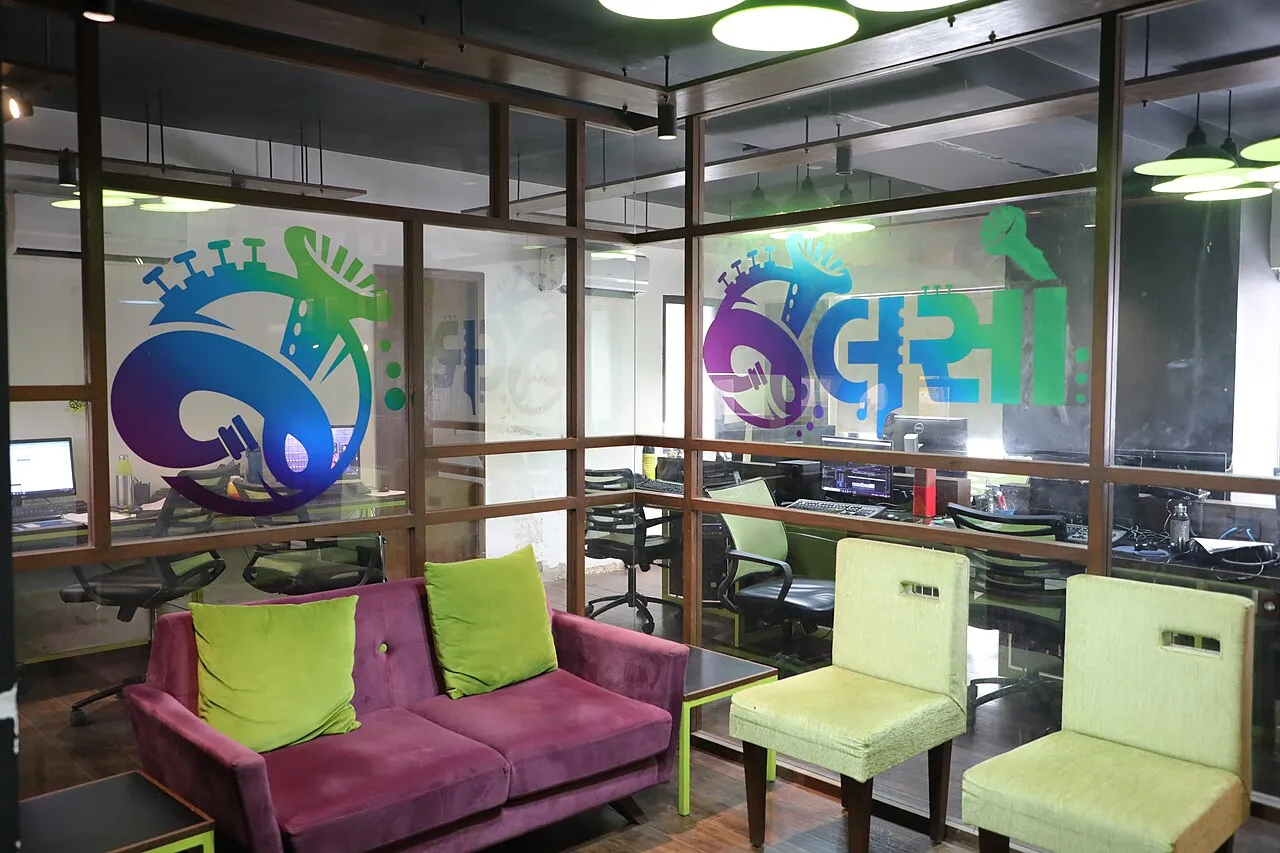
A decision is made in rooms, not in decks. The rooms have walls, doors and a table, and the photographs below are a fair reminder of what a shortlist meeting is: a group of people under time pressure.


Ownership changes, and the work does not pause
Studios get bought, and names change above the studio’s head. Work & Co states that it joined Accenture Song in 2024. Wolff Olins has belonged to Omnicom since 2001. Both are company claims, and both are reminders that the entity which signs your contract may not be the entity that finishes it.
The four questions that protect you are dull and effective: who signs, who delivers, what happens on a change of control, and where the files live. Put them into the proposal stage, while everyone is still trying to be agreeable. In month four, the same questions cost money to ask.
What to do with this on Monday
- Ask for the team sheet before you ask for ideas.A list with names and weeks is verifiable; a promise of “the senior team” is not.
- Run the process against the three commitments of the 2022 Pitch Positive Pledge.Be positive a pitch is required, run a positive pitch, provide a positive resolution; the test works in both directions.
- Request a decision log from a past project.It shows whether reviews end in decisions or in the next meeting.
- Read the change-of-control clause before the pricing page.Work & Co joined Accenture Song in 2024 and Wolff Olins has been part of Omnicom since 2001, both company claims; continuity is a contract term.
- Check the name on the case study.DesignStudio relaunched as Further on 16 September 2025, so every credit needs a date attached.
- Ignore any pitch-cost statistic you cannot trace.The three-pitches figure has no publisher, no sample and no date behind it.
Sources
- The Pledge — Pitch Positive Pledge, 2022
- About the pledge — Pitch Positive Pledge, 2022
- About — Pentagram, accessed 2026 (company claim)
- Inside agency Wolff Olins — Digiday, accessed 2026
- About — Wolff Olins, accessed 2026 (company claim)
- Company — Work & Co, accessed 2026 (company claim)
- DesignStudio relaunches as Further — Design Week, 2025
- Our story — ustwo, accessed 2026 (company claim)
- About evaluation — Awwwards, accessed 2026
- Why an IPA Effectiveness Awards submission is not just any award submission — Institute of Practitioners in Advertising, accessed 2026