
“Create impactful print advertising in luxury publications that captures the attention of affluent property buyers and investors. From publication selection to creative execution, this is the complete playbook for print advertising excellence in luxury real estate.
Luxury Real Estate Print Advertising in Premium Publications: A Strategic Guide for 2026
There is a moment in the marketing of a luxury property when the digital impression has been made, the website has been visited, the video has been watched—and yet the buyer remains unconvinced. In that decisive moment, the most powerful tool in your arsenal may not be a pixel on a screen. It may be a page in a magazine. A full-spread advertisement in the right publication, at the right time, with the right creative execution, can transform a curious browser into a committed buyer. Print advertising in luxury real estate is not obsolete. It is the final, tactile confirmation of a brand's substance.
In an age of infinite digital noise, print has become the medium of distinction. When a billionaire buyer flips through the pages of Architectural Digest, Robb Report, or a bespoke coffee-table publication at a private jet terminal, they are not looking for information. They are looking for validation. They are looking for brands that have the confidence, the resources, and the taste to invest in permanence. A luxury print advertisement is not a conversion tool in the traditional sense. It is a credential. It is a signal that your brand belongs in the same world as the properties you represent.
This guide explores the complete strategy for luxury real estate print advertising in premium publications. It covers publication selection, creative design principles, photography execution, copywriting for print, placement strategies, integration with digital campaigns, and the measurement techniques that justify what remains one of the most significant investments in luxury real estate marketing.
Selecting the Right Luxury Publications for Property Advertising
The first and most consequential decision in print advertising is where to appear. The wrong publication wastes budget and damages brand positioning. The right publication creates instant credibility and reaches precisely the audience capable of transacting at the highest levels.
Understanding Publication Hierarchy in Luxury Real Estate
Not all publications are created equal. In luxury real estate, publications exist in a hierarchy that reflects their audience demographics, geographic reach, editorial standards, and brand associations. Understanding this hierarchy is essential for strategic placement.
Tier 1: Global Luxury Lifestyle Publications
These publications reach the ultra-high-net-worth population across continents and carry the highest brand prestige. Advertising here signals global ambition and international capability.
- Architectural Digest: The definitive publication for architecture, design, and luxury interiors. Its audience includes design-conscious buyers, architects, and collectors. Advertising in AD associates your properties with design excellence and cultural significance. The editorial environment is highly selective, making paid placement more credible by association.
- Robb Report: Focused on luxury lifestyle, travel, automobiles, and real estate. The readership is actively affluent, with high transaction propensity. Robb Report real estate advertising reaches buyers who are already in purchasing mode across multiple luxury categories.
- Wallpaper*: A younger, more design-forward audience. The readership values contemporary architecture, urban luxury, and cultural relevance. Ideal for modernist developments and urban penthouses targeting younger tech wealth and creative industries.
- Monocle: A globally minded, intellectually curious audience. Monocle readers value quality, discretion, and understated luxury. The publication's restrained aesthetic rewards advertising that matches its editorial sophistication.
- Financial Times (How to Spend It): The intersection of wealth and international business. FT readers are decision-makers with significant investable assets. How to Spend It reaches the segment of the wealthy who view luxury real estate as portfolio diversification and lifestyle investment.
Tier 2: Regional and National Luxury Publications
These publications offer concentrated reach within specific markets and are essential for properties with geographic focus.
- Mansion Global (Wall Street Journal): The real estate destination for Wall Street Journal readers. Highly targeted toward finance professionals, international investors, and established wealth. The digital integration with WSJ's global readership provides a unique print-digital hybrid advantage.
- Gotham / Hamptons Magazine: New York-focused luxury lifestyle publications. Essential for Manhattan, Brooklyn, and Hamptons properties. The readership is socially connected, culturally active, and locally influential.
- Los Angeles Magazine / The Hollywood Reporter: For Southern California and entertainment industry properties. These publications reach the creative elite, entertainment executives, and celebrity-adjacent buyers.
- Miami / Palm Beach society magazines: Essential for South Florida luxury properties. The local society magazine ecosystem in Miami, Palm Beach, and Naples is intensely influential for social buyers and seasonal residents.
- Regional shelter magazines: Publications like San Francisco's C California Style, Texas's Modern Luxury, or Chicago's CS provide localized reach with high production values.
Tier 3: Niche and Special-Interest Publications
These publications reach highly specific buyer segments with intense engagement.
- Sotheby's Magazine / Christie's Magazine: Auction house publications that reach the world's most serious collectors and art-world buyers. Essential for properties adjacent to cultural institutions or with significant art collections.
- Yachting publications (Boat International, Yachting World): For waterfront properties, marina developments, and coastal estates. The crossover between yacht ownership and waterfront real estate is substantial.
- Golf publications (Golf Digest, Links): For golf course communities, country club properties, and resort real estate. Golf course properties benefit from placement in publications where the lifestyle is the primary interest.
- Private jet and aviation magazines (Worth, Elite Traveler): Read by the ultra-mobile wealthy who purchase properties in multiple jurisdictions. These readers are actively looking for real estate in locations connected to their travel patterns.
Publication Selection Criteria
When evaluating publications for luxury real estate advertising, apply the following criteria:
Audience Demographics: Request detailed media kits from publications. Examine reader income, net worth, age, geographic distribution, and primary interests. A publication with a lower total circulation but higher concentration of ultra-high-net-worth readers is preferable to a mass-luxury publication with diluted demographics.
Editorial Environment: The quality of editorial content surrounding your advertisement directly impacts perception. Publications with rigorous editorial standards create a halo effect for advertisers. Conversely, publications that accept every advertiser without editorial discretion diminish the value of all advertising within them.
Production Quality: Examine the paper stock, printing quality, color reproduction, and binding. Luxury real estate advertising requires production quality that does justice to architectural photography. Glossy, heavy-stock publications in high-quality printing environments will make your images look extraordinary. Thin, newsprint-adjacent publications will destroy months of careful photographic preparation.
Distribution Methodology: Understand where and how the publication reaches readers. Is it subscriber-only? Available in luxury hotel lobbies? Distributed at private jet terminals? Placed in high-end retail? Direct-mailed to curated lists? The distribution methodology determines whether your advertisement reaches the intended audience or sits unread on a newsstand.
Digital Integration: The most effective print publications in 2026 have robust digital platforms, social media presence, and email newsletters. Multi-platform placements extend the value of print investment and create cohesive brand presence across channels.
Competitive Presence: Analyze whether competing properties, developers, or agents advertise in the publication. If your competitors are present, you must be present to maintain visibility. If none of your competitors are present, the publication may represent an untapped opportunity—or may not reach the right audience. Understanding the competitive landscape informs strategic positioning.
Rate Card vs. Negotiated Rates: Publication rate cards are starting points, not endpoints. High-end publications often negotiate rates based on volume commitments, annual contracts, and package deals. Approach negotiations with a clear annual plan rather than purchasing one-off placements at full rate.
Print Ad Design Principles for Luxury Real Estate
The design of a luxury real estate print advertisement must accomplish in a single, static image what a digital campaign accomplishes over multiple touchpoints. It must capture attention, communicate prestige, evoke emotion, and inspire action—all within a fraction of a second and without the benefit of motion, sound, or interaction.
The Visual Hierarchy of Luxury Print Advertising
Every element in a print advertisement competes for the viewer's limited attention. The visual hierarchy determines which elements win.
The Hero Image (70% of Visual Impact): The photograph is the single most important element. In luxury real estate print advertising, the image should occupy at least 60-70% of the layout. The best hero images are not straightforward property photos. They are aspirational scenes that happen to include the property. A twilight exterior with warm interior light glowing. A figure on a terrace at sunset. A detail shot of a material or view that suggests the whole without showing it. The hero image should create desire before a single word is read.
The Headline (15% of Visual Impact): The headline should be brief, evocative, and emotionally resonant. In luxury real estate, headlines that sell lifestyle outperform headlines that sell features. "Where the Atlantic Meets Your Morning Coffee" outperforms "3-Bedroom Oceanfront Condo." The typography should be elegant, legible, and distinctive. Custom typefaces or exclusive fonts create differentiation. Headlines should never be in all caps, which reduces readability and suggests shouting rather than whispering.
The Brand Mark (10% of Visual Impact): Your logo should be present but not dominant. In luxury advertising, the brand mark is the signature, not the subject. It should be refined, understated, and positioned to anchor the layout without competing with the hero image. White space around the logo enhances its perceived importance.
Body Copy and Call to Action (5% of Visual Impact): The body copy should be minimal—perhaps 50-100 words maximum. In luxury print, less is definitively more. A brief paragraph of evocative description, perhaps a price or key descriptor, and a website or QR code. The call to action should feel like an invitation, not a demand. "Private viewings by appointment" is infinitely more effective than "Call now!"
Layout Architecture for Different Ad Sizes
Full-Page Spread (Double-Page): The most impactful format for flagship properties. The spread allows for panoramic hero images, generous white space, and the sense of expansiveness that luxury properties demand. Use the gutter as a design element, not a constraint. Consider images that span the spread or compositions that use the fold as a dramatic transition.
Single Full Page: The standard for most luxury real estate print advertising. The layout should divide the page into three zones: the hero image occupying the upper two-thirds, the headline and brand mark in the upper third or across the center, and the minimal copy and contact information in the lower third. White space should be abundant—never fill the page with information.
Half-Page and Fractional Ads: Used for agent branding, service promotion, or secondary property listings. These require even greater restraint. One dominant image, one line of headline, and a website. Anything more feels cluttered and cheapens the luxury impression.
Inserts and Gatefolds: Premium placements that create interactive, dimensional experiences. A gatefold that opens to reveal a panoramic view. An insert that feels like a separate brochure within the magazine. These placements command attention through physical interaction and are worth the premium investment for flagship properties.
Color Psychology and Typography in Print
The color palette of a print advertisement must consider the medium's physical properties. What appears sophisticated on screen may look different on paper. Always request printed proofs or mockups before finalizing color choices.
Black and White with Single Accent: The most timeless luxury print aesthetic. Black and white photography with a single color accent—perhaps a gold brand mark, a deep burgundy headline, or a midnight blue text block. This approach signals editorial quality, artistic intention, and confidence.
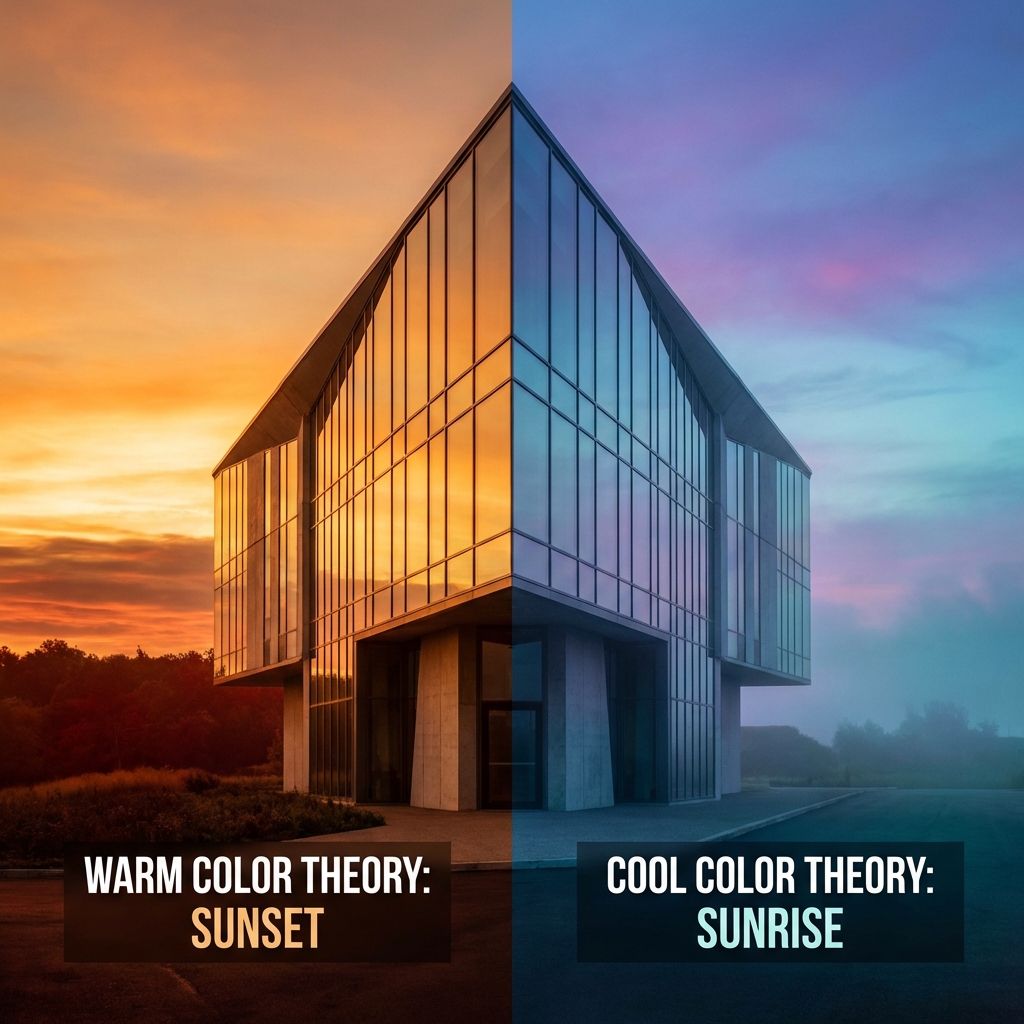
Warm Tones and Earthy Palettes: For properties emphasizing natural materials, organic architecture, and warm climates. Rich browns, deep greens, warm golds, and terracotta tones create associations with earth, nature, and timelessness.
Cool Tones and Modern Palettes: For contemporary urban properties, glass-and-steel architecture, and younger audiences. Slate grays, cool whites, metallic silvers, and ice blues create associations with precision, modernity, and technology.
Typography in Print: The tactile nature of print rewards typography that would be impractical on screen. Fine serifs, elegant scripts, and delicate letterforms are readable in print at larger sizes and create an impression of refinement that sans-serif screen fonts cannot match. Invest in premium typeface licensing for print advertising. The difference between a widely available free font and an exclusive, well-designed typeface is immediately apparent to discerning buyers.
The Power of White Space
White space—areas of the advertisement without content—is not empty. It is the visual equivalent of luxury itself. In luxury real estate print advertising, white space creates breathing room, focuses attention on what matters, and communicates confidence. A brand that can afford to leave space on a $50,000 full-page spread is a brand that has succeeded. White space suggests abundance rather than desperation. Use it generously.
Photography and Visual Execution for Print Ads
Print advertising demands a different caliber of photography than digital. On screen, images are viewed at 72-150 pixels per inch. In print, images are reproduced at 300 pixels per inch or higher. The resolution difference means that every imperfection, every shortcut, every compromise in photography becomes visible in print. Print advertising requires the highest possible photographic standards.
Print-Specific Photography Requirements
Resolution and File Preparation: Print images must be prepared at 300 DPI (dots per inch) minimum, with some premium publications requiring 400 DPI for optimal reproduction. For a full-page advertisement (8.5 x 11 inches), this means image dimensions of at least 2550 x 3300 pixels—substantially larger than typical web resolution. Images must be supplied in CMYK color mode rather than RGB, with color profiles that match the publication's printing specifications.
Color Management and Proofing: The same image will look different on screen, on an inkjet printer, and in a magazine printed on a web press with specific ink and paper combinations. Professional print advertising requires color-managed workflows, soft-proofing using the publication's ICC profiles, and physical press proofs for critical campaigns. The cost of a press proof is negligible compared to the cost of a full-page advertisement that reproduces poorly.
Paper Stock Interaction: Glossy coated paper stocks create vibrant, saturated colors with high contrast. Uncoated matte stocks create softer, more subtle images with less color punch. The same photograph may require different color treatment for different publications. Provide images optimized for the specific paper stock of the publication you are advertising in.
Bleed and Trim Considerations: Print advertisements require bleed—extra image area that extends beyond the final trim size—to ensure the image reaches the edge of the page after trimming. Standard bleed is 0.125 inches on all sides. Critical image elements should be kept within the "safe zone" (typically 0.25 inches inside the trim) to avoid being trimmed off. Understanding these technical requirements prevents last-minute cropping disasters.
Hero Image Selection for Print Impact
The image selected for a print advertisement must have immediate visual impact at arm's length—the typical distance from which a magazine is held. The image must also reward closer inspection, revealing detail and quality that reward sustained attention.
Iconic Views: Images that capture the property's most distinctive feature—whether a view, an architectural detail, or a spatial composition. The iconic view is instantly recognizable and immediately communicates the property's value proposition.
Emotional Moments: Images that capture a feeling rather than a feature. Morning light through a bedroom window. A fire in the hearth at dusk. The reflection of a pool at twilight. These emotional moments create connection before rational evaluation begins.
Scale and Context: For estate properties, aerial photography that reveals the relationship between the house, the land, and the landscape. For urban properties, the dramatic perspective that reveals the property's relationship to the city skyline or waterfront. Scale and context images communicate the property's significance in its environment.
Material Details: Close-up images of materials—marble, wood, steel, fabric—that communicate the quality of construction and finishing. Detail shots signal craftsmanship and invite the tactile imagination. In print, where the viewer can study the image at leisure, detail shots have more impact than online.
Human Presence (Used Strategically): The silhouette of a figure on a terrace. A hand resting on a marble countertop. The suggestion of human presence without the distraction of a specific person. These images help viewers imagine themselves in the space while maintaining the property as the hero.
Ad Copywriting for Luxury Property Print Advertising
The copy in a luxury print advertisement must accomplish its work in fewer than 100 words. Every word must earn its place. The tone must be confident, evocative, and restrained. The goal is not to sell the property in the advertisement—it is to create sufficient desire that the reader seeks more information.
The Language of Luxury Print Advertising
Print advertising for luxury real estate has a distinct vocabulary that differs from digital copy, brochures, and even verbal presentations. It must be compressed, poetic, and precise.
The Opening Statement: Often a single sentence that establishes the property's identity and emotional promise. Not a description, but a proposition. "The last residence of its kind on this coastline." "A private sanctuary above the city's finest address." "Where architecture becomes landscape, and landscape becomes home."
The Descriptive Core: Two to three sentences that suggest without enumerating. The copy should paint an impression rather than a specification sheet. Instead of listing features, evoke sensations. "Morning light arrives through floor-to-ceiling glass, illuminating hand-finished plaster walls. The terrace extends the living room into the Pacific, dissolving the boundary between shelter and horizon. Every material has been chosen for how it will age, not how it will impress."
The Proof Point: A single credential that establishes legitimacy. The architect's name. The development's heritage. The number of similar properties that have sold. The award the property has received. This proof point provides rational justification for the emotional desire the image and copy have created.
The Invitation: The call to action in luxury print advertising is never a command. It is an invitation. "Private viewings by appointment." "Inquiries welcomed at [website]." "For qualified buyers, a personal introduction." The invitation creates exclusivity and filters for seriousness.
What to Avoid in Print Copywriting
Exclamation Points: The mark of enthusiasm is the mark of desperation in luxury advertising. Never use exclamation points.
Superlatives Without Substance: Words like "amazing," "incredible," "stunning," and "spectacular" are empty. They ask the reader to supply the meaning rather than providing it. Specific, concrete language is always more powerful.
Feature Lists: Print advertising is not a listing sheet. The reader should be left wanting more information, not overwhelmed with details. Save the specifications for the website, the brochure, or the personal consultation.
Price Pressure: Phrases like "priced to sell," "must see," and "won't last" create urgency that signals desperation. Luxury properties do not expire. They wait for the right buyer.
Excessive Branding: The brand name should appear once, elegantly. Repeating the brand name multiple times in a small advertisement suggests insecurity and cheapens the impression.
Size and Placement Strategies for Maximum Impact
Where your advertisement appears in a publication and how large it is directly impact its effectiveness. Strategic placement is as important as creative execution.
Ad Size Strategy
Full-Page Spreads: Reserve for flagship properties, major launches, and brand campaigns. The double-page spread is the most impactful format in print and should be used when the property or message justifies the investment. Spreads create an immersive, cinematic experience that no other format can match. They are particularly effective for properties with panoramic views, dramatic architecture, or exceptional scale.
Single Full Pages: The workhorse of luxury real estate print advertising. Full-page advertisements provide sufficient space for a hero image, headline, and minimal copy without feeling cramped. They offer the best balance of impact and cost for most campaigns.
Half-Page and Junior Pages: Useful for secondary properties, service promotion, or maintaining presence in a publication where you have already featured full-page advertisements. Half-page ads should be even more restrained than full pages—one image, one line, one brand mark. Anything more is too much for the space.
Inserts and Custom Formats: Gatefolds, tipped-in cards, belly bands, and custom inserts create dimensional, tactile experiences that command attention. These formats are worth the premium for properties targeting the very highest echelon of buyers, or for events where the physical object becomes a keepsake.
Positioning Strategy Within Publications
Front-of-Book vs. Back-of-Book: Front-of-book placements (the first 20-30 pages) receive higher attention because readers are more engaged at the beginning of a magazine. These positions often command premium rates. Back-of-book placements can be equally effective for luxury real estate because readers studying the back sections are often in a contemplative, slower-paced mode of engagement. The appropriate placement depends on the reader's expected mindset.
Right-Hand vs. Left-Hand Pages: Research consistently shows that right-hand pages receive slightly more attention than left-hand pages because readers naturally turn to the right page first. In a spread, the left page serves as the setup and the right page delivers the punchline. For single-page advertisements, the right-hand position offers a marginal advantage worth requesting if available.
Facing Editorial Content: The editorial context surrounding your advertisement influences perception. Placement adjacent to high-quality editorial content about design, architecture, or luxury lifestyle creates positive associations. Avoid placement near controversial, negative, or incongruous content. Most publications cannot guarantee specific adjacencies, but you can request categories of preferred placement.
Special Sections and Themed Issues: Publications often produce special issues focused on real estate, design, architecture, or specific geographic regions. These themed issues offer concentrated readership interest in your category and are ideal for luxury real estate advertising. Themed issues also tend to have longer shelf lives, as readers save them for reference.
Cover Positions and Premium Placements: Inside front cover, inside back cover, and back cover positions command premium rates but offer unmatched visibility. These positions are appropriate for brand-building campaigns, major property launches, and situations where maximum impact justifies maximum investment. The back cover, in particular, is seen by every reader who picks up the magazine, regardless of whether they open it.
Frequency and Campaign Duration
Single insertions rarely generate significant results in luxury real estate. Print advertising requires repetition to build awareness and credibility. The optimal frequency depends on the publication's schedule, the property's marketing timeline, and the budget.
Launch Campaigns: For new property launches, a concentrated burst of 3-4 consecutive monthly insertions in key publications creates the impression of ubiquity and momentum. This is particularly effective for properties in competitive markets where multiple developments are launching simultaneously.
Sustaining Campaigns: For ongoing brand presence or long-term property marketing, quarterly insertions in 2-4 key publications maintain visibility without oversaturating the budget. Sustaining campaigns should rotate creative to avoid reader fatigue.
Seasonal Alignment: Luxury real estate advertising benefits from seasonal alignment. Ski properties should advertise in autumn and winter publications. Coastal properties should concentrate in spring and summer issues. Urban properties often perform well in September and January issues, when readers are returning from vacation and considering life changes.
Event Tie-Ins: Coordinate print advertising with major events—Art Basel, the Cannes Film Festival, fashion weeks, yacht shows. Publications distributed during these events reach globally mobile audiences in purchasing mindsets. The advertisement becomes a physical anchor in a temporary, transient environment.
Print-to-Digital Integration with QR Codes and URLs
The most effective print advertising in 2026 does not exist in isolation. It serves as the gateway to a deeper digital experience. Print-to-digital integration transforms a static advertisement into the entry point of an immersive journey.
QR Code Strategy for Luxury Print Ads
QR codes have evolved from clunky, ugly necessities to elegant, design-integrated elements. In luxury print advertising, QR codes should be treated as design elements, not afterthoughts.
Design-Integrated QR Codes: Custom QR codes that incorporate brand colors, logos, or visual motifs while maintaining scan reliability. These codes blend into the advertisement's aesthetic rather than disrupting it. Work with designers who understand QR code error correction and can create custom codes that remain functional while reflecting brand identity.
Strategic Placement: QR codes should be placed where they are discoverable but not dominant. The lower right corner, near the brand mark, or integrated into the image itself as a subtle watermark. The code should be large enough to scan easily (minimum 1 x 1 inch for print) but small enough to not dominate the layout.
Destination Experience: The QR code must lead to an experience worthy of the journey. A mobile-optimized landing page with the property's cinematic video, 3D tour, and inquiry form. Not the homepage. Not a generic contact page. A curated, immersive destination that extends the promise of the print advertisement.
Tracking and Attribution: Use unique QR codes and URLs for each publication and each insertion. This enables precise tracking of which publications, which issues, and which creative variations generate the most digital engagement. UTM parameters appended to URLs provide detailed analytics in Google Analytics and other platforms.
URL Strategy: Even with QR codes, a simple, memorable URL should be included in the advertisement. Some readers prefer typing URLs to scanning codes. Vanity URLs like [YourBrand].com/PropertyName or [YourBrand].com/PrivateCollection are easier to remember and type than complex tracking URLs. Redirect these vanity URLs to the full tracking URLs for analytics capture.
Measuring Print Advertising Effectiveness
The traditional knock against print advertising is that it cannot be measured. This is no longer true. While print lacks the granular tracking of digital advertising, sophisticated measurement techniques can evaluate effectiveness and optimize future investment.
Direct Response Tracking
Unique Phone Numbers: Assign unique phone numbers to each publication. Call tracking services record which number generated each inquiry, enabling precise attribution to specific advertisements and publications.
Unique URLs and Landing Pages: Create dedicated landing pages for each print campaign. [YourBrand].com/AD-[PublicationName]-[MonthYear] provides clean tracking of web traffic generated by print advertisements.
QR Code Scan Analytics: QR code platforms provide scan counts, geographic data, time-of-day analysis, and device information. This data reveals not just how many people scanned the code, but when and where they did so.
Promotional Codes: For event invitations, exclusive previews, or gated content, include unique promotional codes in print advertisements. The number of code redemptions provides direct response data.
Inquiry Source Surveys: When prospective buyers make contact, ask how they heard about the property. While self-reported data is imperfect, it provides directional insights, particularly for high-intent buyers who remember the touchpoint that initiated their interest.
Brand Impact Measurement
Brand Lift Studies: Commission pre- and post-campaign surveys among the target audience to measure changes in brand awareness, brand perception, and purchase intent. These studies isolate the impact of print advertising from other marketing activities.
Share of Voice: Track the number of your brand's print advertisements compared to competitors in key publications over time. Maintaining or increasing share of voice in important publications signals competitive health.
Engagement Metrics: For publications with digital platforms, track the combined print-digital impressions, clicks, and engagement. Many publications now offer comprehensive metrics that include both the physical circulation and the digital amplification of the print placement.
Sales Correlation: Analyze whether periods of concentrated print advertising correlate with increases in inquiries, showings, and closings. While correlation does not prove causation, consistent patterns over time build confidence in print's contribution to the marketing mix.
Cost Per Qualified Lead: Calculate the total cost of print advertising (creative production, media placement, and related expenses) divided by the number of qualified leads generated. Compare this cost per lead to other marketing channels. Print may have a higher cost per lead than digital, but if the leads are of higher quality (higher conversion rates, higher transaction values), the higher cost may be justified.
Cost Analysis and Budget Allocation for Print Ads
Print advertising in luxury publications represents a significant investment. Understanding the cost structure enables strategic budget allocation and ROI evaluation.
Print Advertising Cost Structure
Media Placement Costs: A full-page advertisement in a Tier 1 global luxury publication typically ranges from $15,000 to $75,000 for a single insertion, depending on circulation, positioning, and timing. Regional publications range from $3,000 to $20,000. Niche publications range from $2,000 to $10,000. Premium positions (covers, gatefolds, inserts) command 50-200% premiums above standard rates.
Creative Production Costs: Professional photography for print advertising ranges from $5,000 to $25,000 per session. Graphic design and layout for a single print advertisement ranges from $2,000 to $10,000. Copywriting ranges from $1,000 to $5,000. For a flagship campaign with multiple creative executions, production costs can reach $50,000-$100,000.
Print Preparation and Proofs: Color correction, retouching, file preparation, and press proofs add $2,000-$5,000 per campaign. These costs are essential and should not be skimped. A poorly prepared file can ruin a $50,000 media placement.
Distribution and Logistics: For custom inserts, belly bands, or special formats, additional production and insertion costs apply. These can range from $1,000 to $10,000 depending on complexity and quantity.
Budget Allocation Framework
For a luxury real estate brand or property with a significant marketing budget, the following allocation framework provides a starting point:
Flagship Properties ($20M+): Allocate 15-25% of the marketing budget to print advertising. For a $500,000 marketing budget, this means $75,000-$125,000 for print. Concentrate on 2-4 Tier 1 publications with full-page spreads and premium positions. The goal is maximum impact, not broad reach.
Primary Properties ($5M-$20M): Allocate 10-15% of the marketing budget to print. For a $200,000 marketing budget, this means $20,000-$30,000. Focus on 2-3 Tier 1 or Tier 2 publications with single full-page advertisements. Maintain presence without overextending.
Secondary Properties or Brand Awareness: Allocate 5-10% of the marketing budget to print. For a $100,000 marketing budget, this means $5,000-$10,000. Use fractional pages or single insertions in 1-2 targeted publications to maintain visibility among key audiences.
Annual Brand Campaigns: Brands with ongoing visibility needs should negotiate annual contracts with 2-4 key publications. Annual contracts typically provide 15-30% discounts off rate card and guarantee preferred positioning. An annual contract with a major publication might cost $50,000-$150,000 for quarterly insertions, depending on the publication and format.
Negotiating with Publications
Luxury publication advertising is negotiable. Rate cards are starting points. Approach negotiations with:
Volume Commitments: Offer to commit to multiple insertions in exchange for discounted rates. Publications prefer guaranteed revenue over uncertain one-off bookings.
Package Deals: Bundle print placements with digital advertising, email newsletter placements, social media promotion, and event sponsorships. Package deals create comprehensive visibility and typically offer better value than individual placements.
Added Value: Request added value beyond discounted rates—preferred positioning, extra digital impressions, editorial coverage, access to subscriber lists, or event integrations. Publications often have flexibility in non-rate-card benefits.
Seasonal Flexibility: Offer flexibility on insertion dates in exchange for lower rates. Publications may have unsold inventory in certain months and will discount to fill it.
New Advertiser Incentives: Many publications offer special rates or added value for first-time advertisers. If you are new to a publication, ask about new advertiser programs.
Native Advertising and Editorial Partnerships
Beyond traditional display advertising, native advertising and editorial partnerships offer deeper integration with publication content and can create more meaningful engagement than standalone advertisements.
Native Advertising for Luxury Real Estate
Native advertising is paid content that matches the publication's editorial style and format. In luxury publications, native advertising takes the form of sponsored articles, property features, and design stories that are labeled as sponsored but deliver genuine editorial value.
Sponsored Property Features: A 2-4 page feature on a property, written in the publication's editorial voice, with professional photography, architectural commentary, and lifestyle context. These features feel like editorial content to readers and generate higher engagement than traditional advertisements. The key is ensuring the content is genuinely interesting—architectural significance, design innovation, or notable provenance—not just a sales pitch disguised as journalism.
Advertorials and Brand Stories: Longer-form sponsored content that tells the brand story of a developer, agency, or agent. These pieces focus on philosophy, approach, and track record rather than specific properties. They build brand authority and position the advertiser as a thought leader.
Design and Architecture Partnerships: Publications focused on design and architecture often welcome partnerships with properties that exemplify outstanding design. Sponsored design features, architect interviews, and material spotlights create editorial-advertising hybrids that serve the publication's readers while showcasing the property.
Editorial Partnerships
Beyond paid advertising, editorial partnerships leverage a publication's credibility and audience through genuine editorial coverage.
Press Release and Media Pitch Strategy: Develop relationships with real estate editors, design editors, and lifestyle editors at target publications. Pitch genuinely newsworthy stories—record-breaking sales, architectural awards, notable residents, design innovations. The goal is earned editorial coverage, which carries more credibility than any advertisement.
Exclusive Previews and Press Events: Invite editors and journalists to exclusive property previews before public launch. A well-executed press event can generate editorial coverage in multiple publications, multiplying the value of the event investment.
Expert Commentary and Contributed Content: Position your brand's principals as experts available for commentary on market trends, design developments, and luxury lifestyle topics. Editors are always looking for credible sources. Becoming a go-to expert generates ongoing editorial mentions and positions the brand as an authority.
Awards and Recognition: Pursue legitimate design, architecture, and real estate awards that publications cover. An award-winning property generates editorial coverage that money cannot buy. The investment in awards submissions is small compared to the potential editorial return.
Case Study: Print Advertising Success for a $45M Coastal Estate
A coastal estate in the Mediterranean market faced a common challenge: global visibility among qualified buyers in a competitive luxury market. The property was extraordinary—a historic villa with modern additions, designed by a renowned architect, positioned on a private peninsula. But digital marketing alone was not reaching the specific audience capable of such a purchase.
The strategy centered on a concentrated print campaign in four Tier 1 publications over six months. Each insertion was a full-page spread with a different creative execution—twilight exterior, aerial view, interior detail, and lifestyle moment. The campaign was timed to coincide with the spring and summer issues, when the target audience was most likely to be in Mediterranean locations.
The results demonstrated print's unique value. Website traffic from the vanity URLs increased 340% during campaign months. Inquiries specifically mentioning the print advertisements were 40% more likely to result in qualified showings than inquiries from other sources. The eventual buyer—a technology founder from Silicon Valley—first encountered the property in an in-flight magazine during a business trip to Europe. The tactile experience of the print advertisement, encountered during a moment of calm at 35,000 feet, created the emotional connection that initiated a three-month buying process.
The total print investment was $180,000 for media placement, $45,000 for creative production, and $15,000 for related events and digital integration. The property sold for $45 million. The print advertising cost represented 0.53% of the transaction price—a remarkably efficient marketing investment by any standard.
Conclusion: Print as a Statement of Brand Substance
In luxury real estate marketing, print advertising is not a legacy tactic. It is a deliberate choice that signals brand substance, confidence, and permanence. In a world where every digital impression is ephemeral, the physical presence of a brand in a beautiful publication creates a lasting credential. The buyer who encounters your property in the pages of a magazine they have chosen to hold, to keep, to return to, is a buyer who has already qualified themselves by their taste and their attention.
The key to successful print advertising is treating it with the same strategic rigor as every other marketing channel. Select publications with the precision of a sniper, not the scatter of a shotgun. Create creative executions that would be at home in a gallery. Write copy that rewards the reader's intelligence. Integrate print with digital so that the physical encounter leads to an immersive digital experience. Measure results with the discipline of a data scientist, even while creating the art of a poet.
Print advertising in luxury real estate is expensive, demanding, and unforgiving. But when executed with excellence, it creates impressions that no digital banner, no social media post, and no email campaign can match. It creates permanence. And in luxury real estate, permanence is the ultimate promise.
Ready to create print advertising that belongs in the world's finest publications? Contact our luxury real estate marketing team for a complimentary consultation on your print advertising strategy and creative direction.
Download our free resource: The Luxury Real Estate Print Advertising Planning Template