
“Made-up names survive registration; descriptive ones rarely can. The register's taxonomy, the Madrid route through more than a hundred countries and Emaar's pattern set the constraints before anyone writes a candidate list.
A legal asset before a creative one
A property name is a legal asset before it is a creative one, and the register decides which candidates are worth defending.
What follows is the shortlist order that keeps a launch out of trouble: the strong-and-weak taxonomy the United States Patent and Trademark Office publishes, the Madrid route through more than a hundred countries, and the naming pattern Emaar already runs in public.
Why the register grades names before taste does
The United States Patent and Trademark Office sorts marks on a spectrum rather than a yes-or-no list: fanciful, arbitrary and suggestive marks are strong, descriptive and generic marks are weak, and the office's own guidance says plainly that “weak trademarks can be difficult and costly for you to defend”.
The examples on that page are what make the taxonomy usable for property work, because each one maps onto a decision a developer faces every quarter. Fanciful marks are invented words that carry no meaning apart from the goods: Exxon for petroleum, Pepsi for soft drinks. Arbitrary marks are ordinary words applied to something unrelated: Apple for computers. Suggestive marks hint at a quality without stating it: Coppertone for sun-tanning products.
Descriptive marks sit at the weak end, and the office's wording is worth keeping: they “merely describe some aspect of your goods or services without identifying or distinguishing the source”. They can be registered in certain circumstances, such as acquiring distinctiveness through extensive use in commerce over many years, and the office's examples include “Creamy” for yogurt and “Bed & breakfast registry” for lodging reservation services. Read that list against a typical Dubai or Riyadh launch and the flaw shows up immediately: the first draft is almost always descriptive plus a location, which is the class the register defends least willingly.
Three grades of candidate, and the defence each one buys
Before a candidate list is written, it helps to know which register class each direction will land in, because the class decides how much of the budget goes to protection instead of launch.
Strong, and the easiest to hold
This is the class the office calls strong in its own guidance: invented words such as Exxon for petroleum and Pepsi for soft drinks, and real words moved to an unrelated field such as Apple for computers. For a property launch the equivalent is a coined name with no dictionary meaning, and the commercial advantage is direct. Nobody else is standing near it in the register, so the clearance file is short, the objections are fewer, and the money that a descriptive name would pour into defending acquired distinctiveness stays available for launch. The cost is a story: an invented word arrives empty, so the first campaign has to teach it.
Middle of the spectrum
A suggestive mark leans towards a quality without naming it, which is how the office describes Coppertone for sun-tanning products. In property terms this is the name that implies light, water, height or calm without stating the feature the buyer is paying for. It sits above descriptive work on the spectrum and still asks more of a clearance file than a coined name, because the word is in circulation and adjacent marks exist. The practical rule for a committee is to test the candidate as a sentence: if a salesperson can say it without explaining it, it is probably suggestive rather than descriptive, and it can be defended.
Weak, and registrable only with history
Descriptive marks describe an aspect of the goods or services without identifying the source, in the office's own words, and they are registrable only in certain circumstances, such as acquired distinctiveness through extensive use in commerce over many years. The published examples include “Creamy” for yogurt and “Bed & breakfast registry” for lodging reservation services. This is where most first drafts land, because it is the shortest distance from a project brief to a name: a feature plus a location. The register does not forbid it, but it will not hand over the exclusivity a developer assumes it is buying.
Clearance is class-based, and it runs on two rails
For a developer selling across borders, the international route is worth understanding before the first candidate is shortlisted. The Madrid Protocol is one application covering more than a hundred countries and regional intellectual property offices, processed through a single application and payment, and as of 1 October 2026 the office's page notes that the World Intellectual Property Organization's Madrid e-Filing is the single place to file international applications based on United States applications and registrations.
The process depends on a home filing, which is the part committees underestimate. You file through your Office of origin — the intellectual property office of a Madrid System member where you have already applied for or registered the mark, your basic mark — and that office certifies and forwards the application. The organization then performs formal examination, registers the mark in the International Register and publishes it in its Gazette of International Marks. Each designated office then examines the mark under its own domestic law. An irregularity notice typically allows three months to correct, and each designated office must grant or refuse protection within 12 months, or 18 months in some cases.
A Gulf launch usually needs both rails at once: a national filing through the Ministry of Economy and Tourism under Federal Decree-Law No. 36 of 2021, which defines a trademark widely enough to cover names, words, symbols, drawings, photographs, colour sets, three-dimensional marks and holograms, and an international registration designating the UAE through the Madrid System, which the country joined in 2021. European clearance work is database-led, through the European Union Intellectual Property Office's eSearch plus, its TMview search across participating offices and TMclass classification portal.
The order that keeps a shortlist alive
Naming work that survives review is sequenced, not parallel. The order below is the one that keeps legal and creative conversations from happening twice, and it costs nothing to follow it.
-
01
Constraints before candidates
Agree the buyer, the two languages the name must work in, the countries where it will be sold and the register classes the business actually occupies. This is a brief about restrictions, not about taste.
-
02
Cut the weak classes before anyone falls in love
Descriptive-plus-location candidates are the ones committees defend hardest and the register protects least. If a direction can only be owned through years of acquired distinctiveness, say so while it is still a direction.
-
03
Say every candidate out loud in both scripts
A name is spoken on a call, spelled to a lawyer and typed into a search box before it is ever set in type. Arabic and English pronunciation, unwanted meanings and the way the word breaks into syllables all belong in this pass, not in a later proof.
-
04
Run the register screen on both rails
A UAE national filing runs through the Ministry of Economy and Tourism, and an international registration designates the UAE through the Madrid System. European markets add their own databases. Counsel needs the class list, not just the name.
-
05
Test the survivors, and only the survivors
Consumer research is expensive and slow, which is exactly why it should not be spent on directions the register will refuse. Take three or four cleared candidates to the buyer segment and let the field choose between defensible names.
The location qualifier is a strategy decision
Most Gulf project names carry a location, and that is a decision before it is a filing. Emaar publishes a collection-at-community pattern across ten UAE communities, from Hillsedge at Dubai Hills Estate to Creek Bay at Dubai Creek Harbour, and the convention does two jobs in one line: it tells the buyer where they are and it repeats the parent's authority on every launch.
Co-branded names change the shape of the question. Mercedes-Benz Places by Binghatti and Bugatti Residences by Binghatti both keep the developer inside the project name, which moves clearance from a single mark to a licensed-mark relationship with its own terms, approvals and usage rules. A developer taking that route is not buying a word; it is signing up to a partner's standards for how the identity appears, and those standards have to reach the Arabic sales office as clearly as the English hoarding.
There is a quieter argument for the two-level convention that has nothing to do with law: a salesperson who can say the collection and the community in one breath is explaining the product before the brochure opens.
Candidate shapes, scored against the register
The table below puts four directions side by side and records where each one lands in the register. The example marks are the office's own published illustrations, and the two Gulf names are live projects that anyone can check.
| Candidate shape | Where the register puts it | What it costs you | Real example |
|---|---|---|---|
| Fanciful, invented word | Strong class, the easiest to defend | One clearance set per class and country, and a campaign that teaches the word | Exxon for petroleum, Pepsi for soft drinks |
| Arbitrary, real word moved to property | Strong class, though the word is registered elsewhere for other goods | The same filing work plus a reason for the word to be there | Apple for computers |
| Descriptive plus location | Weak class, registrable only with acquired distinctiveness | The bill arrives later, in defence and in refusals | “Creamy” for yogurt, “Bed & breakfast registry” for lodging reservations |
| Co-branded project name | Clearance becomes a licensed-mark relationship | Licence terms and approvals sit outside the filing itself | Bugatti Residences by Binghatti, Mercedes-Benz Places by Binghatti |
Score every candidate on this table before the copy is written, because the score decides which names deserve a moodboard and which ones deserve a polite note in the margin.
What a rejected name already cost once
The clearest public reversal on record is a packaging decision rather than a name, and it still shows the arithmetic. Tropicana returned to its original packaging on 23 February 2009 after consumer rejection of a January 2009 relaunch, as The Branding Journal's analysis of the episode records.
The lesson for a naming committee is about sequence. The reversal was announced within two months of the change, and the asset that customers had bonded with was put back. Nothing in that account suggests buyers refuse change on principle; the visible asset was withdrawn because it had not been tested with them first. A shortlist that has already been screened against the register and read aloud in both scripts is the cheap version of that test, and it happens while the name is still a line in a document.
Where names are actually read
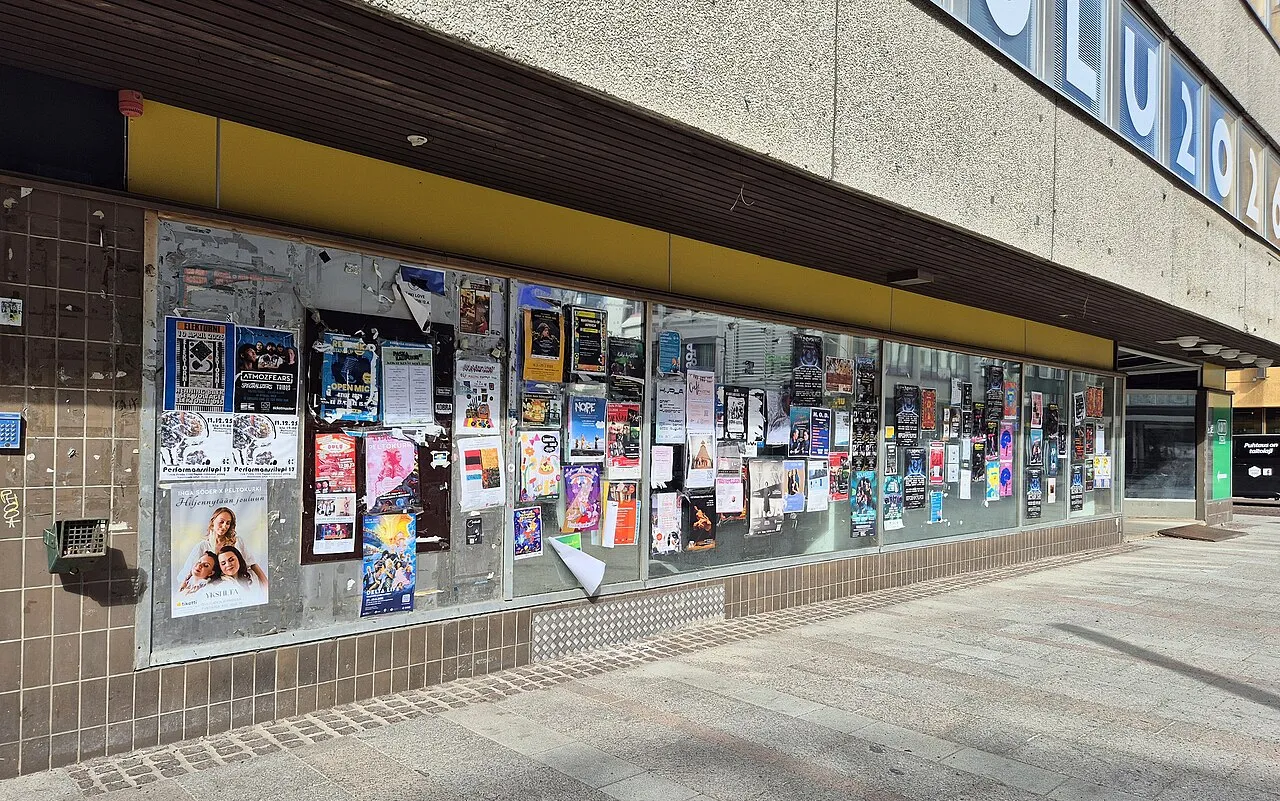
Names are argued about in presentation rooms and read on streets, walls and shelves, which is why the photographs below are part of the argument. Each one is a place where a name has to compete for a glance it will never get twice.


The salesperson test
Names have to survive the phone. Someone reads them to a notary, spells them into a contract, types them into a search box and says them in a sentence that also contains a price. That is a real filter: if the name needs an explanation before it can be written down, the caller loses the thread, and no amount of logo work repairs the moment.
The same test applies in Arabic, which is where descriptive imports fail most often. A name that only works in its Latin form will be mangled in the sales office; a name that reads cleanly in both scripts hands the agent a sentence they can repeat from memory. Emaar's two-level pattern is useful here as a model of rhythm rather than of content: the collection carries the poetry, the community carries the address, and nobody has to decide which one to say first.
None of this removes judgement from naming. It only puts the judgement where it can be defended: constraints first, candidates second, and the register consulted while there is still time to replace a favourite.
Three checks before the file closes
What to do with this on Monday
- Score the shortlist against the register before you score it on taste.The United States Patent and Trademark Office calls descriptive marks weak and says plainly that weak trademarks can be difficult and costly to defend.
- Keep the candidate pool inside the strong classes.Exxon, Pepsi and Apple are the office's own examples of names that live there.
- Plan two filing rails for a Gulf launch.A national filing runs through the UAE Ministry of Economy and Tourism under Federal Decree-Law No. 36 of 2021, and an international registration designates the UAE through the Madrid System.
- Read every candidate aloud in both scripts.If a salesperson cannot spell it on a call, the launch will spend attention it cannot recover.
- Treat domain availability as a constraint, not clearance.The legal test sits with the registers, and every Madrid designation is examined nationally.
- Decide who owns a co-branded name before it reaches the hoarding.Mercedes-Benz Places by Binghatti and Bugatti Residences by Binghatti put a licence inside the name, so the terms get settled before the sales office opens.
Sources
- Strong trademarks — United States Patent and Trademark Office, accessed 2026
- Madrid Protocol for international trademark registration — United States Patent and Trademark Office, updated 1 October 2026
- Filing International Trademark Applications — The Process — World Intellectual Property Organization, accessed 2026
- Intellectual property — The Official Platform of the UAE Government, accessed 2026
- Trade marks — European Union Intellectual Property Office, accessed 2026
- What to learn from Tropicana's packaging redesign failure — The Branding Journal, 2015
- Emaar Properties investor reports and presentations — Emaar, accessed 2026