
“An asset library is a retrieval system with governance, not a folder of attractive files. Organise approved facts, formats, rights, versions, and context so teams choose safely without recreating work.
Diagnose the failure
A library becomes unusable when filenames are cryptic, old renders sit beside approved ones, and nobody knows whether a floor plan, price, logo, or testimonial is current. Teams download locally, edit from memory, or ask the same question repeatedly. The failure is retrieval and governance, not a shortage of storage.
Use a decision framework
Give every asset an owner, project, type, language, market, status, version, approval date, review date, rights note, and intended use. Separate source files from publishable exports. Treat property facts as controlled content, and make the approved source easier to find than a local copy.
A hypothetical real estate example
Implement and measure
Start with the ten most-used assets, assign ownership, and run a monthly expiry review. Provide controlled statuses and a short request path for missing files. Measure search-to-use time, duplicate creation, outdated-file incidents, missing metadata, and retrieval success in a small team check. Findability is a service promise: the person selecting an asset should not need to remember who created it or where it lived. The library earns adoption when retrieval is faster and safer than making a substitute. Every metadata field should answer a retrieval question rather than exist for decoration.
Put it to work
- Assign owner, status, version, and review date to priority assets.
- Separate approved exports from source files.
- Audit the ten most-used assets monthly.
Sources and visual credits
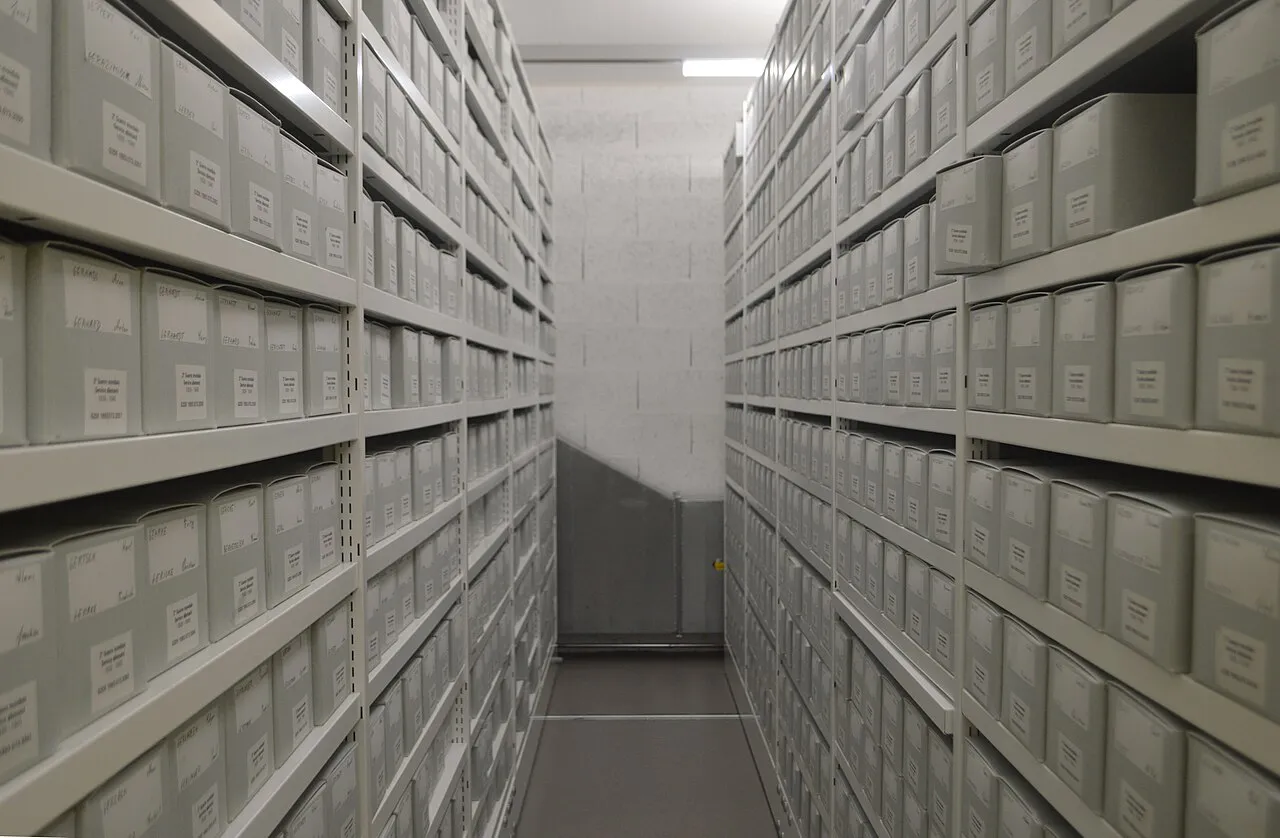
Illustrative photograph: CICR-ICRC-WWII-files-Satigny-archive Roman Deckert 0906. It does not depict the hypothetical example. RomanDeckert · CC BY-SA 4.0 · Wikimedia Commons · CC BY-SA 4.0