
“Future vision can be compelling and honest when the page separates aspiration, approved plan, construction status, and operating reality in both words and images.
Diagnosis
A polished aerial and present-tense copy can make a long-term neighbourhood appear ready today. The risk is greatest when parks, schools, streets, and retail are shown together without phase or status. Readers then fill the gaps with their own delivery assumptions. The communication failure is a missing time dimension.
Decision framework
Give every visual and claim four coordinates: what it is, where it is, when it belongs, and what status it has. Show the current edge of the site, approved future structure, illustrative public life, and phase sequence as different layers. Use future tense when the evidence is a plan, not a promise of operation.
Hypothetical property example
Implementation and measurement
Maintain a timeline-backed visual register and a single legend for current, approved, proposed, illustrative, and completed. Review every update with development and sales. Test a reader’s ability to place one feature in time and status. Measure misread future features, missing labels, and outdated phase visuals across owned and partner channels. Time labels should remain visible when the visual is exported, because the most misleading version is often the cropped image separated from the explanatory page.
Put it to work
- Give every future claim a place, phase, and status.
- Use one legend across renders, maps, and progress photos.
- Test whether readers can place a feature in time.
Sources and visual credits
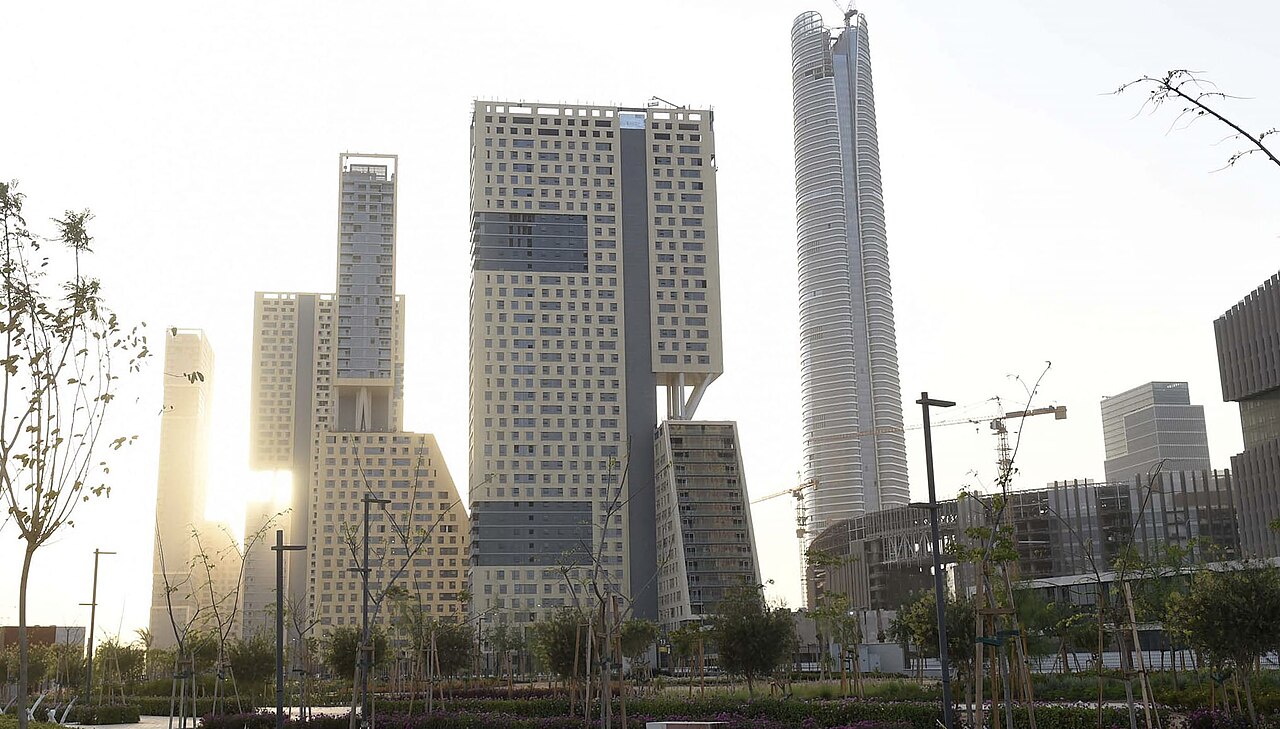
Illustrative photograph: Central business district, New Administrative Capital. It does not depict the hypothetical example. Abdelrhman 1990 · CC BY-SA 4.0 · Wikimedia Commons · CC BY-SA 4.0