
“An amenity claim becomes credible when it states access, operating condition, user, timing, and evidence instead of relying on a seductive noun.
Diagnosis
“Resort-style living” or “wellness community” is not an amenity specification. It leaves unanswered whether a facility exists, who may use it, when it operates, what is included, and whether the image is a proposal. Vague amenity language creates a mismatch between the tour, the brochure, and the eventual resident experience.
Decision framework
Translate each promise into a service record: amenity name, exact location, user eligibility, operating or delivery status, access rule, responsible operator, and evidence date. Distinguish a space from a service and a planned facility from an approved one. Let the promise shrink if the evidence is narrower than the headline.
Hypothetical property example
Implementation and measurement
Give sales a one-line approved description and a longer evidence note for every amenity. Review the register with operations whenever access, hours, or delivery changes. Mystery-test whether a buyer can repeat the status accurately; measure corrections required in calls, brochures, and partner listings rather than promising conversion gains. A buyer can then compare amenities by usefulness and access rather than by the emotional force of the nouns chosen by the campaign writer.
Put it to work
- Turn every amenity noun into a service record.
- Separate current, temporary, approved, and proposed facilities.
- Test whether a buyer can repeat the status accurately.
Sources and visual credits
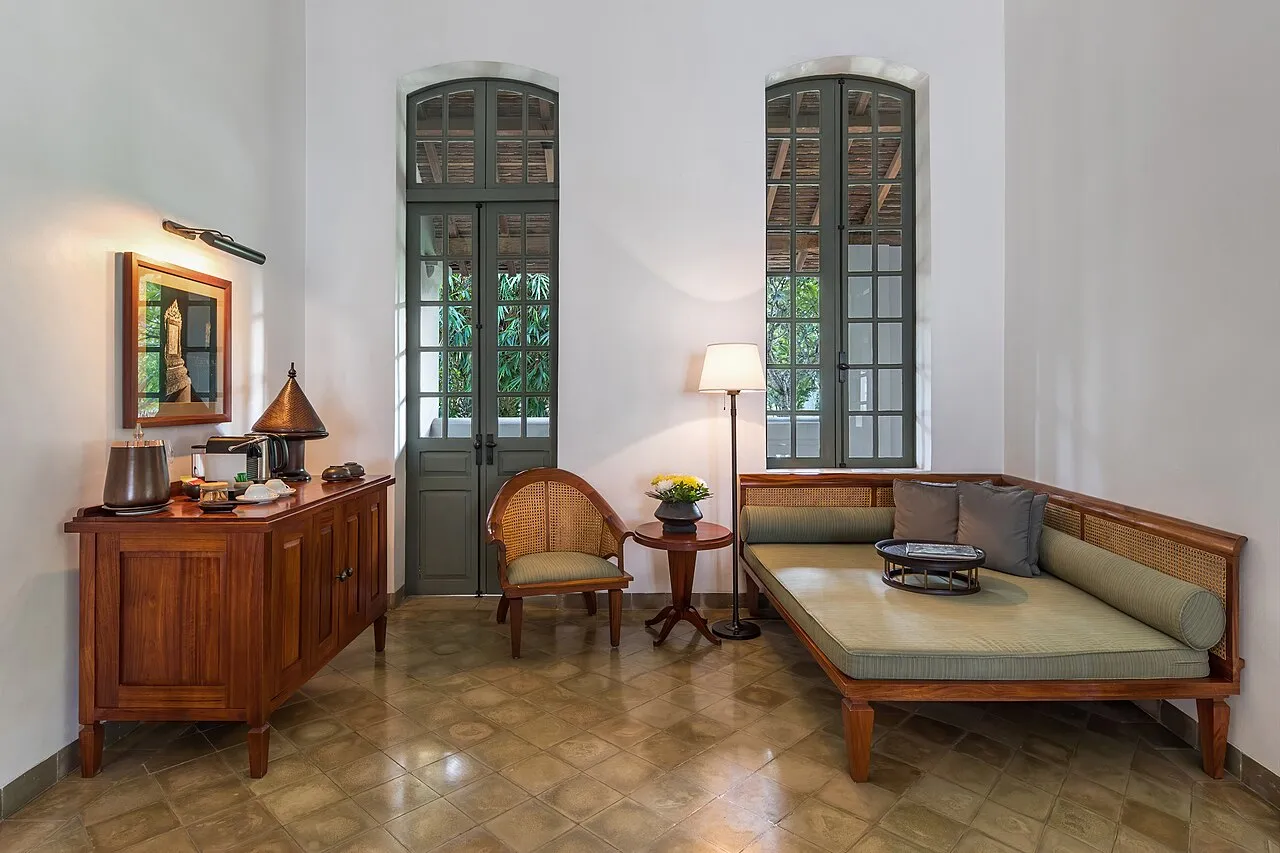
Illustrative photograph: Lobby lounge of Amantaka Suite Amantaka luxury Resort & Hotel Luang Prabang Laos. It does not depict the hypothetical example. Basile Morin · CC BY-SA 4.0 · Wikimedia Commons · CC BY-SA 4.0