
“Refresh an evergreen piece by changing its evidence, question or decision aid—not by swapping adjectives and republishing the same promise.
The specific failure
A “first viewing checklist” can be reposted for years with a new cover while links, availability, images, terminology or buyer concerns quietly change. Duplicate versions compete for attention and may contradict each other. Readers cannot tell which page is current, and the team cannot learn whether the update solved a real problem.
A practical decision framework
Audit the old asset in four layers: facts, audience question, proof and format. Keep stable principles, replace expired evidence, add one newly observed objection and change the decision aid. Preserve a revision note. Zillow’s photography guidance emphasizes honest representation and layout relationships; a refresh should revisit whether images still represent the property accurately, not merely improve color.
A clearly hypothetical property example
Implementation and measurement
Create a quarterly refresh queue based on traffic, search questions, sales objections and evidence age. Freeze the old asset during migration and run link, image, language and approval checks. Compare updated saves, completion, source clicks and qualified actions with the previous version, while noting seasonality. Archive, do not silently overwrite, material factual changes. A short source line can protect the post from being read as an unsupported forecast.
Put it to work
- Audit facts, proof, audience question and format before refreshing.
- Show the revision date and the changes made.
- Compare qualified actions with the previous version.
Sources and visual credits
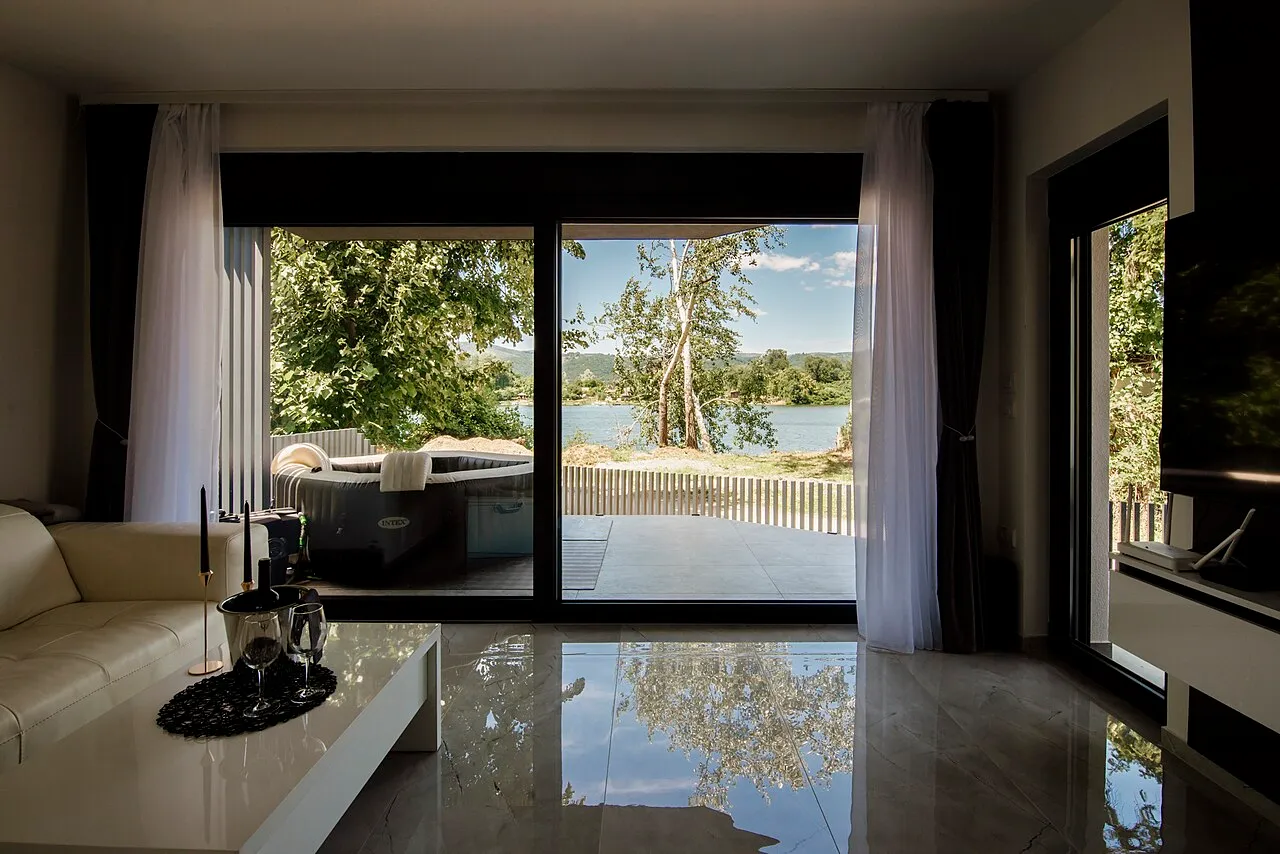
Illustrative photograph: Modern living room with large windows showing view of trees and lake in daylight. It does not depict the hypothetical example. Shixart1985 · CC BY 2.0 · Wikimedia Commons · CC BY 2.0