
“Photography creates interest; dimensions let buyers test fit, scale, and daily use before a viewing.
Diagnose the specific failure
A polished image can communicate light and mood while concealing scale, distortion, circulation, and furniture fit. Buyers must then guess. The failure is missing decision evidence, not too few pixels. Review each hero image against the plan, room label, and question a family must answer before visiting.
A practical decision framework
Pair every room image with a labelled plan location and reliable dimensions or a stated measurement basis. Show room relationships, openings, storage, and features that change use. Keep styling honest; never use a wide angle to imply a size the plan contradicts. Label any scale reference.
A clearly hypothetical example
Implement and measure
Track plan opens from galleries, dimension views, image-to-plan selections, and viewing questions about fit. Run a task test asking a reader to locate the kitchen and decide whether an item could fit while allowing uncertainty. Use observed errors to revise labels; do not infer sales effect from engagement. The goal is not to make every room look larger; it is to let the right buyer rule the home in or out with less guesswork.
Put it to work
- Link every important photo to a named point on the plan.
- Publish dimensions or state measurement basis and uncertainty.
- Test a real fit task rather than gallery attractiveness.
Sources and visual credits
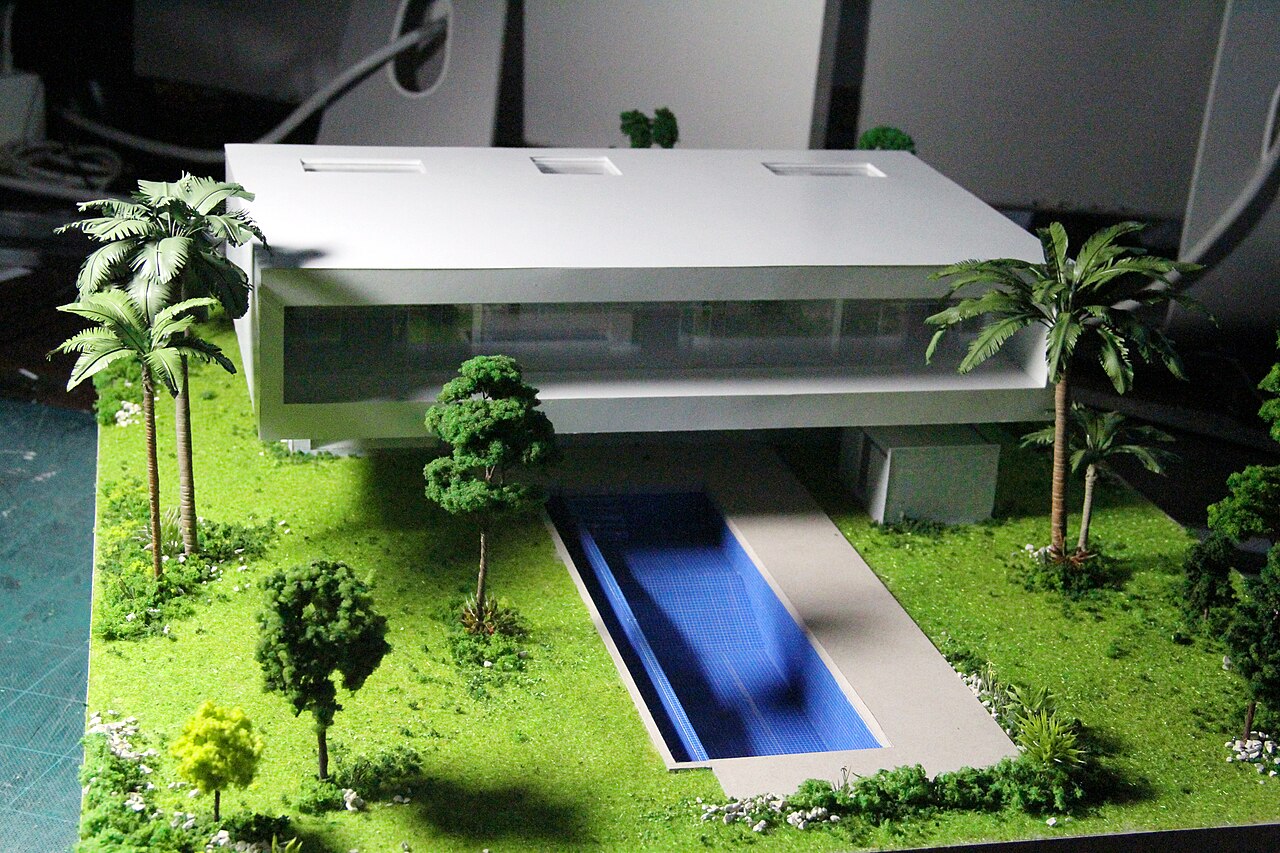
Illustrative photograph: Scale Architectural Model of a Mario Kleff Design 01. It does not depict the hypothetical example. Designer Mario Kleff · CC BY-SA 4.0 · Wikimedia Commons · CC BY-SA 4.0