
“A neighbourhood page earns usefulness by helping people evaluate place, not by repeating a place name.
Diagnosis
A page can target a neighbourhood name yet leave a buyer unable to judge access, surroundings, or fit. Thin location copy creates a discovery promise without decision support. For property audiences in Egypt and the Gulf, local evidence should answer practical questions—where the development sits, how a visitor finds it, and what nearby points matter—without padding the page with generic claims.
Decision framework
Start with the visitor's task, then choose evidence that can be checked: a clear address or map context, transport or access cues, named nearby places where appropriate, and distinctions between adjacent areas. Keep the page's language and links aligned with its intended locale; localized versions need discoverable relationships rather than a pile of near-duplicate pages. If you cannot substantiate a detail, omit it or label it as something to confirm.
Explicitly hypothetical property example
Implementation and measurement
Create an evidence checklist for each neighbourhood template and require an owner for every factual field. Test the map and directions task on a phone, review language and alternate-page signals, and track organic entrances, map interactions, engaged visits, and enquiry starts by page. Qualitatively review whether visitors can answer “where is it?” and “what is nearby?” without searching elsewhere.
Put it to work
- List the visitor questions each neighbourhood page must answer.
- Attach a verifiable owner and source to every local detail.
- Test the map task on mobile and track page-level enquiry starts.
Sources and visual credits
- Nielsen Norman Group: Maps and Location Finders on Mobile Devices
- Google Search Central: Localized versions
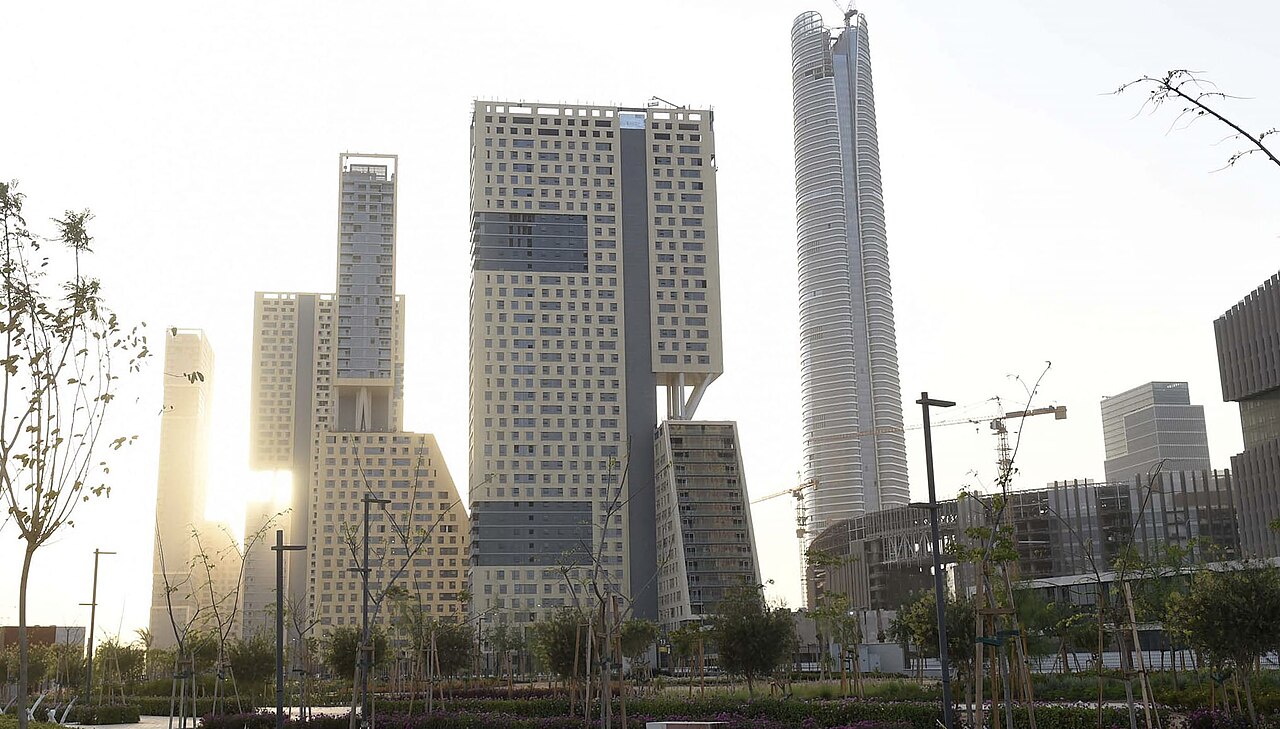
Illustrative photograph: Central business district, New Administrative Capital. It does not depict the hypothetical example. Abdelrhman 1990 · CC BY-SA 4.0 · Wikimedia Commons · CC BY-SA 4.0