
“Visual trust depends on a persistent status system: render, approved design, under construction, photographed completion, or operating space.
Diagnosis
A render and a photograph can share the same crop, lighting, and caption style. When status is left to context, a future image is easily read as a present fact. The problem is not using renders; it is asking one image to carry both aspiration and proof without a visible boundary.
Decision framework
Use a controlled status vocabulary and attach it to the image, caption, gallery filter, downloadable file, and social crop. Explain what the image proves and what it cannot prove. For a completed space, record date and location; for a render, name the design stage and any material or landscaping elements that remain subject to change.
Hypothetical property example
Implementation and measurement
Create a media register with status, date, location, design version, usage rights, and owner. Make status visible in every derivative asset, not only the website gallery. Audit random reposts and sales decks; measure misclassification in a short recognition test and count assets lacking a date or status. Keep the original asset available for audit, because a label added in a social template can disappear when a partner downloads, crops, or translates the image.
Put it to work
- Adopt one status vocabulary across every channel.
- Put the limitation in the caption, not in a hidden footnote.
- Audit derivative crops and sales decks for lost labels.
Sources and visual credits
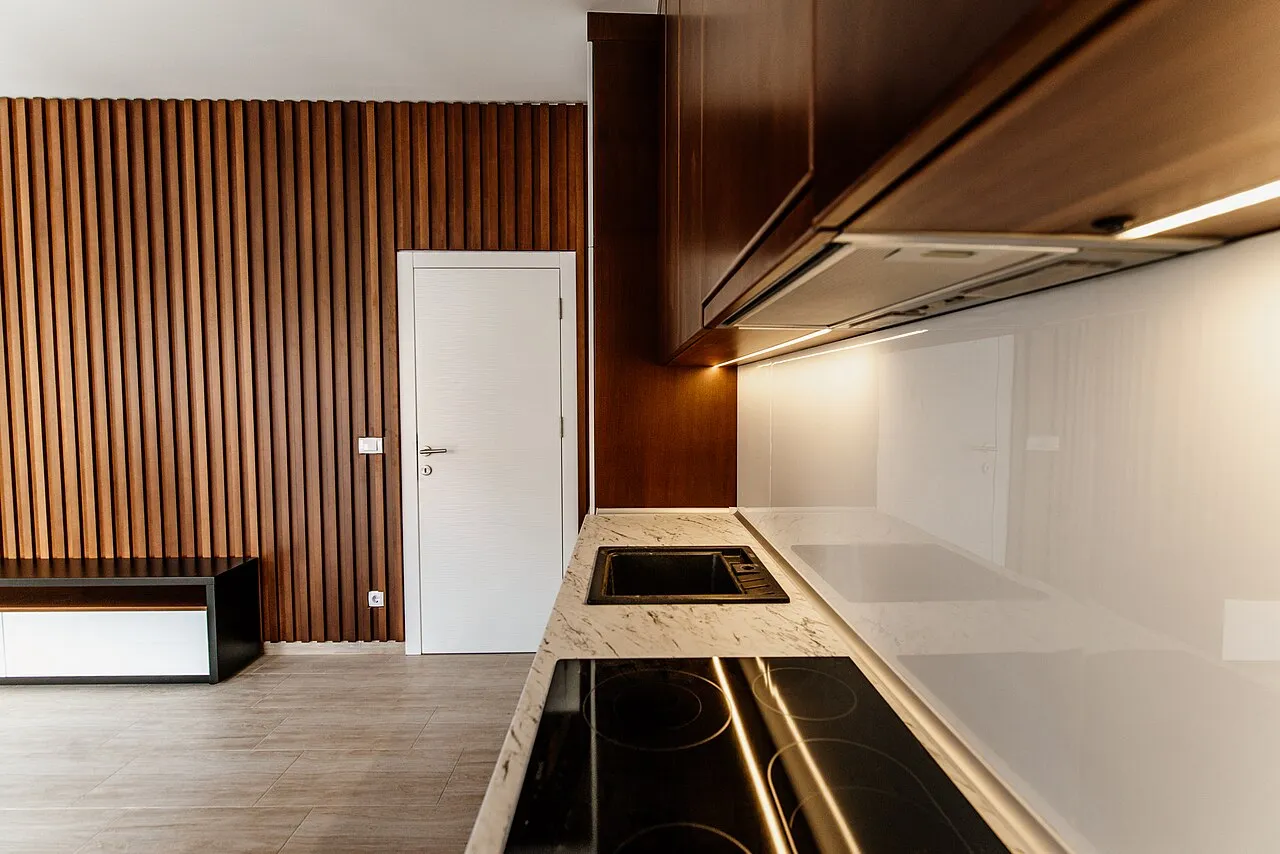
Illustrative photograph: Modern luxury living room with kitchen interior. It does not depict the hypothetical example. Shixart1985 · CC BY 2.0 · Wikimedia Commons · CC BY 2.0