
“A decision-led case study shows how constraints shaped the work, making design expertise inspectable rather than merely photogenic.
Diagnosis
Many case studies run from brief to beauty shots and omit the reasoning in between. Readers see a finished form but cannot understand what was difficult, which alternatives were rejected, or how a constraint affected the result. The story then proves taste, not capability.
Decision framework
Structure each case around five questions: what had to work, what constrained it, what options were considered, what decision was made, and what evidence shows the result. Give drawings, photographs, captions, and stakeholder roles a job. State uncertainty and what the project cannot prove, especially when the work is not operating yet.
Hypothetical property example
Implementation and measurement
Use a case-study template with decision, constraint, evidence, status, and responsible contributor fields. Have design and client teams annotate the draft separately, then reconcile discrepancies. Test whether a reader can explain one trade-off after reading. Measure evidence attached per decision and unsupported adjectives removed during editing. The case can still end with photography, but the photographs now confirm a chain of reasoning instead of asking admiration to stand in for explanation.
Put it to work
- Start with the constraint, not the hero photograph.
- Pair each decision with a drawing, caption, or status proof.
- Ask a reader to retell one design trade-off.
Sources and visual credits
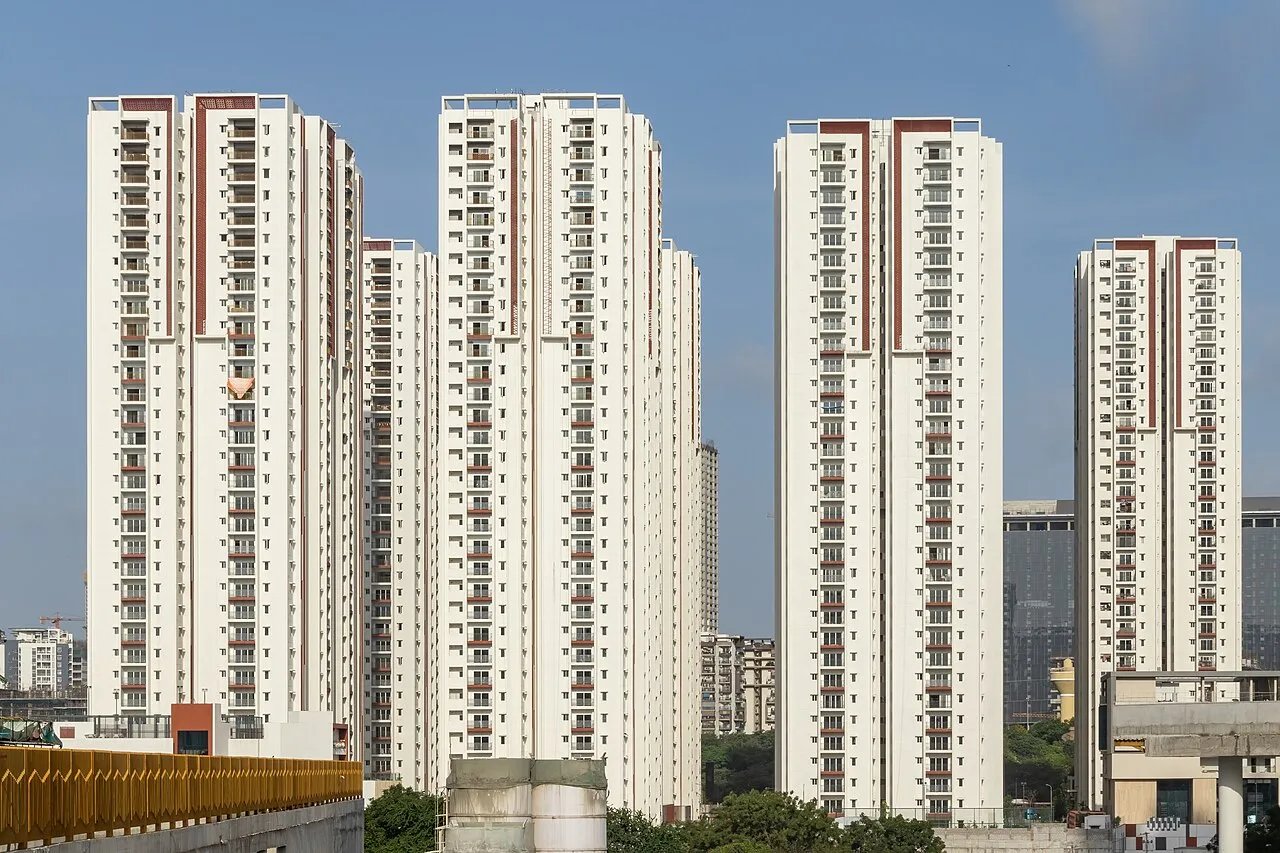
Illustrative photograph: Aparna Zenon, Hyderabad - Symmetric framing of the high-rise apartment towers facade. It does not depict the hypothetical example. iMahesh · CC BY-SA 4.0 · Wikimedia Commons · CC BY-SA 4.0