
“A logo survives a presentation. A brand survives contact with product releases, sales decks and print runs only when the rules travel as data and someone owns the review. That is the difference between a brand system and a book about one.
The logo is the smallest artefact you will deliver
A logo survives a presentation. It does not survive a product release, eight regional sales teams and a printer working to a deadline that moved twice.
What survives is a system: rules that travel as data, a component that already behaves correctly, and a named person who owns the review.
What a published system actually contains
IBM describes Carbon as its open-source design system rather than a style guide, and the anatomy explains why. It is organised into foundations, components and patterns. The foundations are the list a designer would recognise from a brand book, with one addition that matters: the two-by-two grid, accessibility, colour, content, icons, pictograms, motion, spacing, themes and typography. The system also documents how it changes, with a contribution model, a product development lifecycle and a component checklist.
That last part is the difference between a system and a library. A library is something you take; a system is something you maintain, which requires a defined route for adding, adapting and retiring parts. Motion appears in the foundations alongside colour and type, which is a useful correction to the habit of treating movement as decoration applied after the identity is finished.
How a practice became a specification
-
01
23 September 2021
The design tokens community group publishes its first editors' draft, formalising vocabulary that design teams had already been using informally for years.
-
02
14 June 2022
A second editors' draft follows, and the format starts to be discussed by tool makers rather than only by designers.
-
03
20 July 2025
The third editors' draft lands four years after the first, which is how long a format takes when its purpose is to be read by several competing tools.
-
04
28 October 2025
Three stable reports are dated: a format module, a colour module and a resolver module. The stated goal is technology other products and design tools can rely on for sharing stylistic pieces at scale.
One vocabulary, many tools
The value of a format is measured by how many separate programs agree to read it. The community group names Figma, Penpot, Sketch, Tokens Studio, Style Dictionary and Terrazzo among the tools that support the specification, which is the practical test of whether a brand's colour and spacing values will survive a change of design tool at the client.
The vocabulary itself came from practice. In its June 2026 community post the group credits Jina Anne for the phrase design tokens, and notes that she and Val Head stepped back as co-chairs to become chairs emerita. That detail is worth keeping when a procurement conversation turns into a vendor debate: the common language was not written by the company selling the licence.
The book and the system, side by side
A brand system
- Colour and spacing published as tokens with a stable format behind them.
- Components with properties, types and defaults a developer can read.
- A terminology registry so size, state and variant mean one thing.
- A contribution model, a checklist and a lifecycle for retiring parts.
A brand book
- Colour described in prose and swatches, retyped into code by hand.
- Fifty pages of examples without a single installable artefact.
- Naming conventions left to whoever opens the file that morning.
- Revision handled by emailing a new PDF and hoping.
Systems that ship their rules as data
Adobe publishes Spectrum as design data: component interface schemas that describe properties, types and defaults, tokens for colour, typography and layout, and a terminology registry covering sizes, states, variants and a glossary. The same package includes server interfaces and text files written for assisted development, which is a confession about who applies a brand now. A tool that can read the rules will apply them; a tool that can only read sentences will guess.
Google documents design tokens as a foundation of Material 3 inside the system's own documentation, and Salesforce keeps a versioned public system at the Lightning Design System, currently published in its second version. Version numbers are part of governance, because they make a revision a decision rather than an accident.
Four things the machine-readable layer buys
The same value in every surface
A token carries one decided value into design files, codebases and platforms. The stated purpose of the community group's specification is technology products and design tools can rely on for sharing stylistic pieces of a design system at scale, which is precisely what a swatch page in a document cannot promise.
Contrast decided once
IBM lists accessibility among Carbon's foundations rather than as an appendix, and the government systems go further: the United States Web Design System publishes components and patterns together with accessibility, performance and code guidelines, so the accessible version is the default version.
A route for the next person
Carbon publishes its methods of contribution, a component checklist and a product development lifecycle; the British service standard requires teams to use common components and to share whatever new ones they create or adapt. Contribution stops being a favour and becomes part of the specification.
A contract an assistant can read
Spectrum ships component schemas, a terminology registry and server interfaces for AI-assisted development. That is the dividing line inside an automated workflow: a machine can restate a brand book in confident sentences, but only a contract-level artefact such as a token file or a schema lets it render the brand reliably.
Governance is a contract, not a poster
The United States Web Design System publishes components, patterns and design principles alongside accessibility, performance and code guidelines, and adds two artefacts that rarely appear in commercial brand work: a maturity model, so a team can see where it stands without hiring an assessor, and sample contract language for the federal digital experience act. That sample wording is the clearest sign that governance is enforceable: it moves the requirement into a document a supplier signs.
The British counterpart puts the obligation into the service standard itself, requiring teams to use common components and patterns and to share details of any new component or pattern they create or adapt, for example by contributing it to the national design system. The point was published on 8 May 2019 and updated on 30 May 2022. Two governments reaching for the same instrument is not a coincidence; it is what happens when a system is large enough that instruction cannot be delivered person by person.
What four published systems actually ship
| System | Owner | Published as | The governance artefact to copy |
|---|---|---|---|
| Carbon | IBM | Open-source packages, foundations, components and patterns | A contribution model, a component checklist and a development lifecycle |
| Spectrum | Adobe | Design data: tokens, component schemas, a terminology registry | Schemas and a registry that a tool can validate against |
| Web Design System | United States government | Components, patterns and guidelines | A maturity model and sample contract language |
| Design System | British government | Styles, components and patterns | A service standard that requires contribution |
What the public systems cannot give you
Carbon belongs to IBM. Spectrum belongs to Adobe. The web design system belongs to the United States government and the design system it mirrors belongs to the British government. Each solves consistency, accessibility and maintenance inside one organisation or jurisdiction, and none of them carries a voice, a marque or a photography language. Those remain proprietary layers that a client pays an agency to decide, which is why adopting a famous public system is a starting point rather than a brand.
Implementation layers also move. Shopify's React implementation of Polaris now resolves to a repository labelled as deprecated, while the design language itself continues to be documented inside Shopify's developer pages. A plan that treats a toolkit as permanent will date within a few years; a plan that treats tokens, names and review rights as the durable layer will not.
Four claims worth checking
A brand book is a brand system
The published systems are code and data artefacts: Carbon ships packages and a contribution lifecycle, Spectrum exposes tokens, schemas and a registry, and the token format is now a community-group specification with a stable release dated 28 October 2025.
Design tokens are a feature of one design tool
The term came from practice and was standardised through a community group; the tools listed as supporting the specification span Figma, Penpot, Sketch, Tokens Studio, Style Dictionary and Terrazzo. A format with one implementation is a preference, not a standard.
Adopting a public system gives you a brand
Each of the large public systems belongs to one owner and solves consistency inside that owner's estate. Voice, marque, photography and the arguments behind them stay with the client.
Open source means stable forever
Polaris's React implementation is now an archived, deprecated repository while the design language continues. Date the implementation, not the language.
More components means a better system
Component count measures breadth, not ownership. The systems reviewed here pair their libraries with review rights, contribution rules or a standard that requires contribution, and it is those documents that keep the library accurate.
Where the system meets the real world
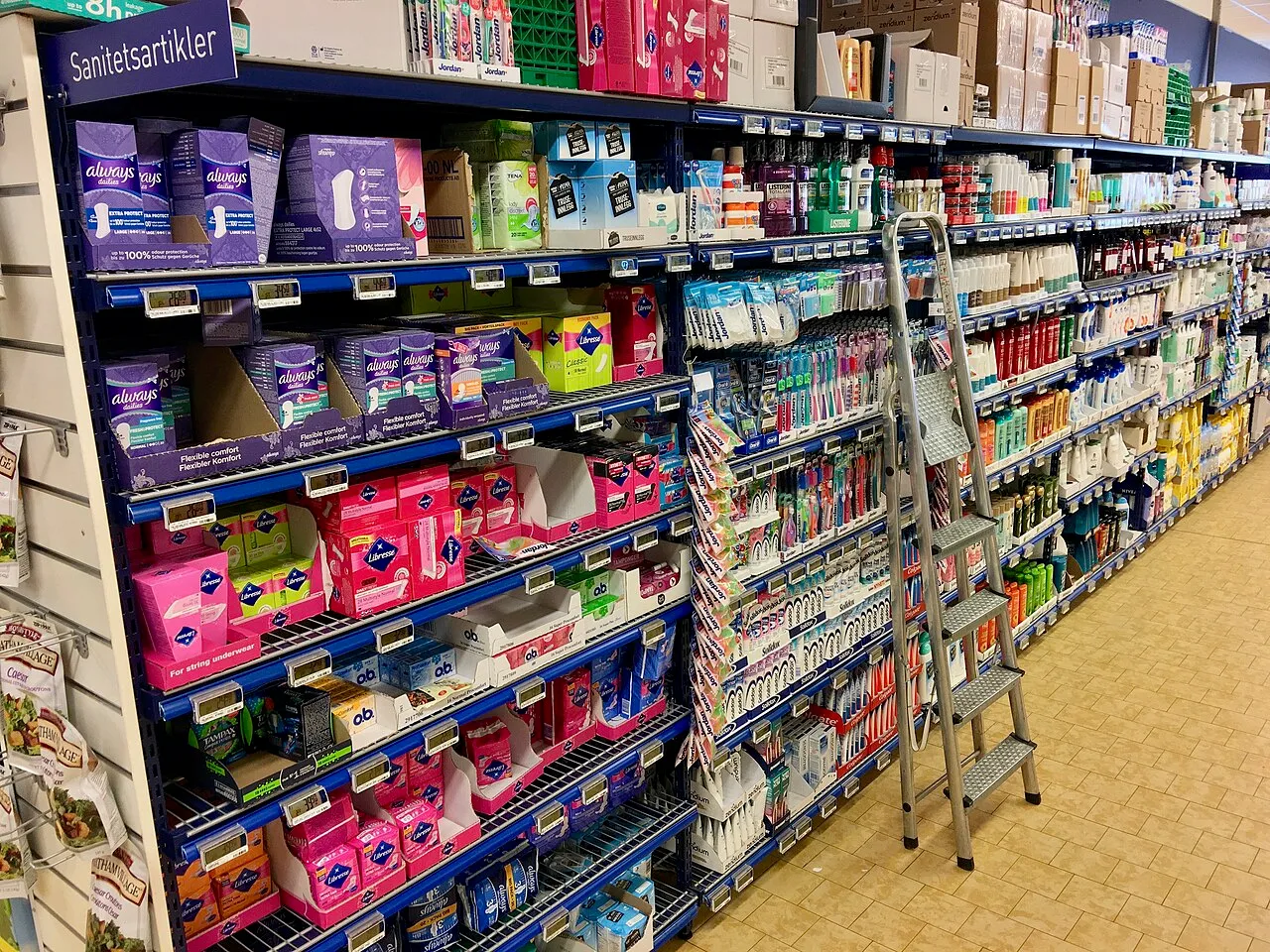
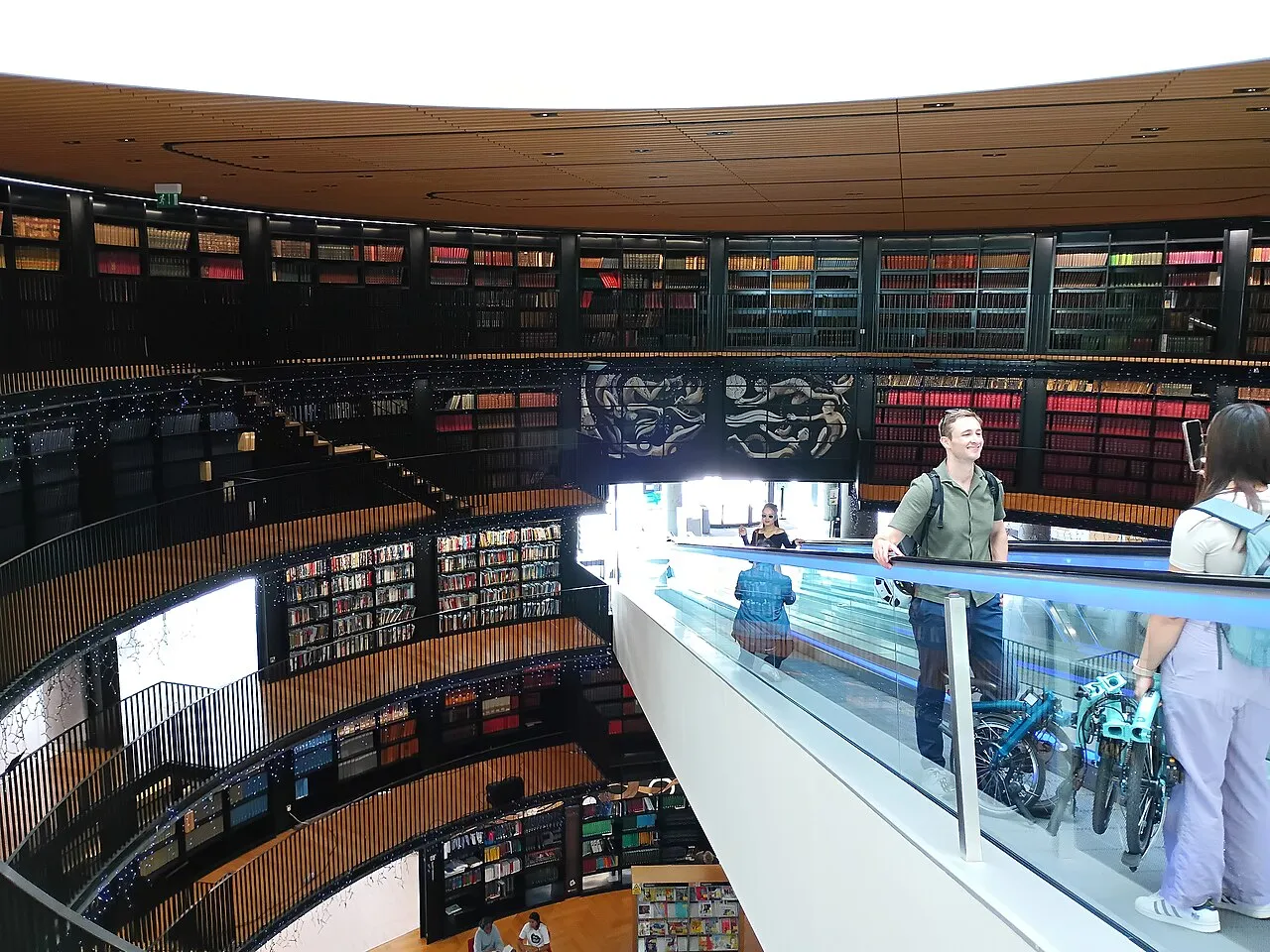
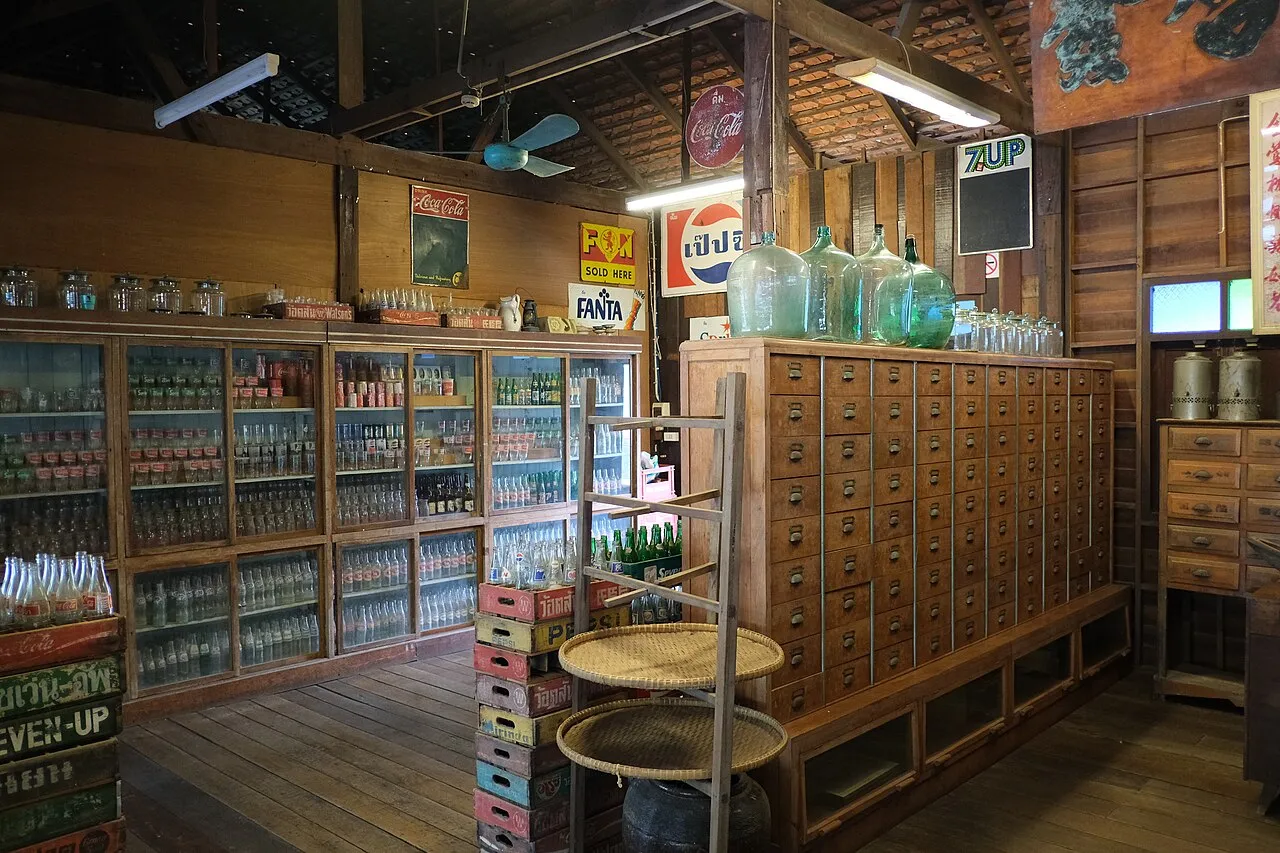
A system is judged on the surfaces nobody in the design team will inspect: a shelf, a library reading room, a shop that arranges its own stock. The photographs below are the same test the tokens face in code, translated into physical places.
What to do with this
- Deliver tokens before you deliver a palette page.A token file carries one decided value into design tools, code and platforms, which is the promise a swatch cannot keep.
- Write the contribution route.Carbon publishes methods of contribution, a component checklist and a lifecycle; without them the library drifts from month two.
- Name a reviewer and a turnaround.The government systems reach for contracts and service standards because a named obligation survives a change of staff.
- Treat motion as a foundation.Carbon lists it beside colour, spacing and typography, which is the correct rank for something customers feel on every interaction.
- Keep the proprietary layers proprietary.Voice, marque and photography are what a client hires an agency to decide, and no public system supplies them.
- Date the implementation, not the language.Polaris's React implementation is archived while the language continues, so plan for replacement rather than permanence.
Sources
- Design Tokens Community Group — World Wide Web Consortium, stable reports dated 28 October 2025
- What is Carbon — IBM Carbon Design System
- Spectrum Design Data — Adobe
- Service Standard point 13: use common standards, components and patterns — GOV.UK Service Manual
- U.S. Web Design System — U.S. General Services Administration
- Design tokens — Material Design 3, Google
- Polaris design system — Shopify developer documentation