
“Guidelines are not abandoned because sellers dislike rules. They are abandoned because at the moment of use the seller finds a document where an asset should be. The governance models that hold up ship components, permissions and a review path.
The manual is not the deliverable
Guidelines are not ignored because sellers dislike rules. They are ignored because at the moment of use the seller finds a document where an asset should be.
The governance models that hold up in the public record ship components, permissions and a route to a human, which is why a government service standard has proven more durable than most brand books.
What the consistency argument actually claims
The fourth of Nielsen Norman Group's ten usability heuristics is the one most often quoted at designers and sales teams alike: users should not have to wonder whether different words, situations or actions mean the same thing, and interfaces should follow platform and industry conventions. The group's explanation, published in January 2021 by Rachel Krause, separates internal consistency, the same patterns used inside a product or a family of products, from external consistency, adherence to the web, platform and domain conventions customers already hold.
That distinction is exactly what breaks in a sales conversation. A large share of the meaning a customer reads is inherited rather than designed: underlined blue text is a link, a cart icon means items to purchase, a magnifier means search, the brand mark sits top left. When a seller improvises a slide that violates those inherited signals, the customer pays a small learning cost, and the group's wording is direct that adherence raises expectation-matching and reduces confusion.
The same article is equally clear about the limit, and this sentence should be printed inside every brand book: consistency does not mean that all applications look and act the same. Consistency plus standards, in Nielsen Norman's own words, is not a push toward identical products.
Two things a brand book can be
What gets used
- Named files a seller can drop into a deck in four minutes.
- A permission line: who may approve a co-branded cover, and in how long.
- Worked examples of the awkward jobs, including a tender cover and a price change.
- Versioned tokens so the same red lands in code and in print.
What gets shelved
- A 60-page document whose download link expires.
- Forty lockups with no guidance on which one fits a square slide.
- The phrase always use approved assets, with no definition of approved.
- No review path, so improvisation becomes the fastest available route.
The strongest example in the record is a service standard
Point 13 of the British government's service standard requires teams to use common components and patterns, and to share details of any new component or pattern they create or adapt, for example by contributing it to the national design system. It was published on 8 May 2019 and last updated on 30 May 2022, which makes it a governance rule with a revision history rather than a poster.
The mechanism is the part brand teams rarely copy. Compliance is achieved by using a shipped asset: the design system publishes the accordion, the back link, the breadcrumbs, the button, the character count, the checkboxes, the error summary, the summary list, the tabs and the task list. A team that needs a date field does not read a paragraph about dates; it installs the component that already behaves correctly, including its error state.
That inverts the usual brief. Instead of telling people what the brand looks like, the standard tells them what to take and what to give back, and it makes contribution part of the requirement rather than a favour. A sales team under a system like that does not need to remember the rules, because the rules arrive attached to the thing it was going to use anyway.
Five moments where guidelines break
| Moment | What the book offers | What the seller needs tonight | The asset that resolves it |
|---|---|---|---|
| A tender cover, ten hours before submission | A logo grid and clear-space rules | A portrait cover that reads at thumbnail size | Two approved cover files plus the typographic scale in points |
| A price table the morning after a price change | Colour values in three colour spaces | A table style that survives a pasted row | A slide template with the table style locked and a marked editable zone |
| A partner's co-branded deck | A rule that logos must not be altered | To know who approves the partner's size and in how long | A one-page permission matrix with a named approver and a response time |
| A recruitment ad in one district | The corporate identity, in full | The one asset that works at one square metre in daylight | A district-level signage file with a proof sheet from the printer |
| An event one week before a launch | The old identity, still current | Transition files that do not look broken next to the new work | A dated transition kit with an end-of-use date printed on it |
The governance machinery a PDF lacks
IBM's Carbon design system publishes the parts of governance that a brand book omits: contribution methods, a component checklist, a product development lifecycle, frequently asked questions and a certificate of originality. Read that list as an answer to the question every designer has heard in a review, which is who decides. A checklist and a lifecycle answer it without a meeting.
Adobe's Spectrum publishes its system as tokens, component interface schemas and a terminology registry, and distributes generated markdown and server interfaces for assisted development. The pattern is consistent across both: the rules exist as data that tools can read, not only as prose a person has to remember.
The technical layer has been standardising as well. The design tokens specification reached a stable version in October 2025 so that designers, developers and tooling vendors can share a visual language across design tools, codebases and platforms. Meanwhile Mailchimp's public brand-assets page shows the minimum viable governance surface for a business that sells through many partners: assets exposed with usage terms, which is a start, but not a substitute for the internal manual, because public pages say nothing about permissions, review rights or the awkward cases.
The sentence that reframes the whole argument
Category entry points are not about the brand, they're about the buyer.
Measure the assets, not the compliance
Ehrenberg-Bass Institute approaches this problem as measurement rather than taste. It offers a distinctive asset measurement service and a cohesion analysis that measures a portfolio's cohesion, on the premise its research reporting states plainly: memories generate sales. Category entry points are tracked to check whether a brand is mentally linked to the situations in which people buy.
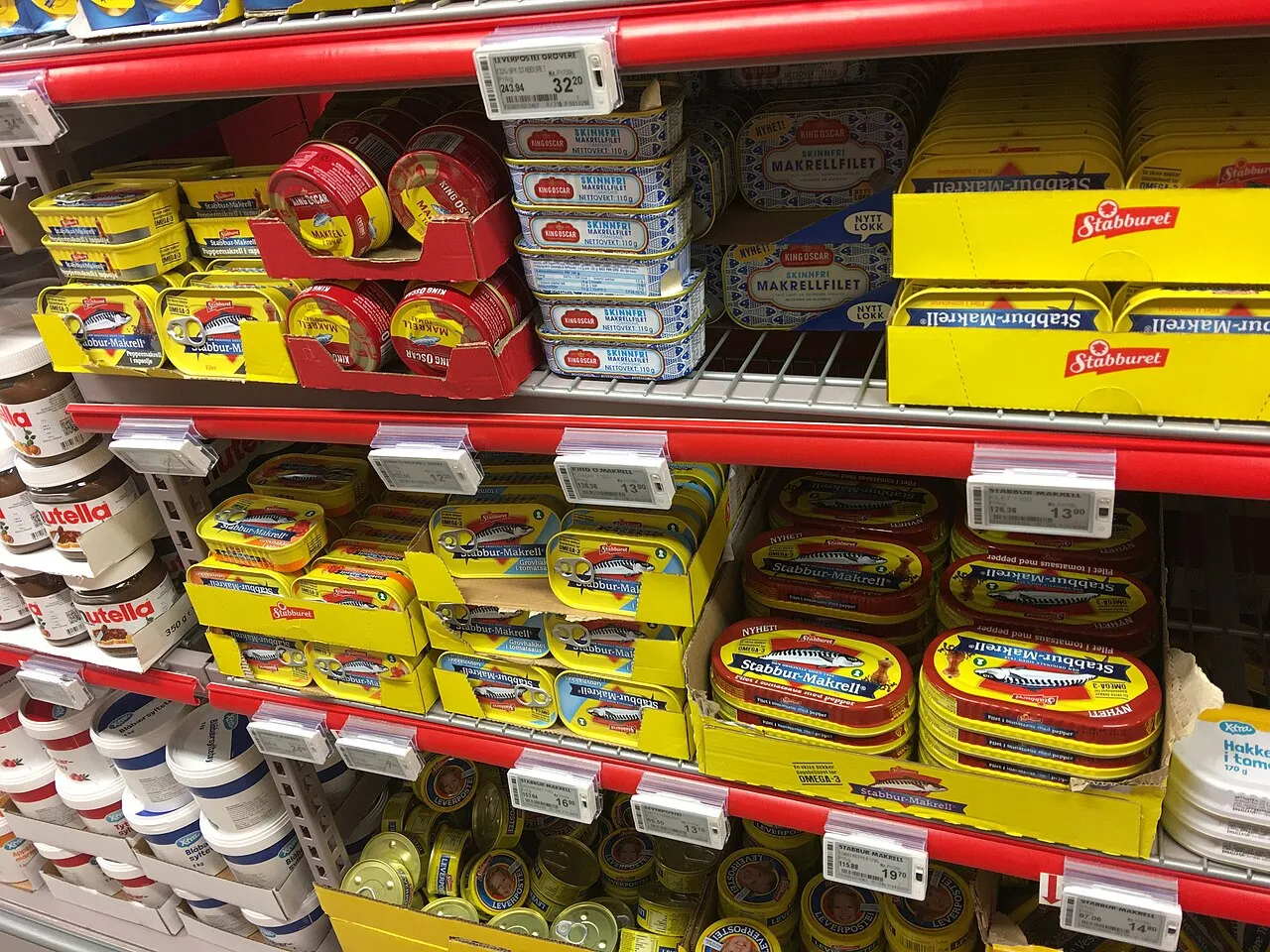
That reframes the governance brief in a useful way. The question stops being whether the sales team followed the book and becomes whether the assets still trigger the same memory across the surfaces the company does not control. A tinned product on a supermarket shelf, a sign above a door and a slide in a tender all carry the same asset into environments the brand team never sees, and each one is a measurement point whether or not anyone measures it.
Four figures that carry caveats
33percent
The revenue increase a vendor survey attributes to consistent branding
Lucidpress, December 2019, described as up to 33 percent and as a 10 percent increase over the same vendor's 2016 number, from a survey of more than 200 organisations. Treat it as a vendor claim.
81percent
Companies in the same survey that still dealt with off-brand content
The useful half of the finding is the failure rate, not the revenue promise.
70versus 8 percent
Use of performance incentives with agencies, above and below 30 million dollars of annual spend
Association of National Advertisers. Control scales with spend, which is the asymmetry brand governance budgets tend to ignore.
13points, revised twice
The service standard that requires teams to use and contribute common components
Published 8 May 2019, last updated 30 May 2022, which is a governance rule with a maintenance trail.
Five claims to check before you repeat them
Consistency raises revenue by 23 percent
The number that circulates most is from a vendor survey whose own 2019 release reports 33 percent and calls that a 10 percent increase over the vendor's 2016 report, based on more than 200 organisations. Attribute it as a company claim with the sample size, or leave it out.
Sales teams ignore guidelines because they do not care
Nielsen Norman's framing is that inconsistency imposes a learning cost on the customer, not that staff are indifferent. The operational failure is usually that no usable asset existed, which is why the government standard fixes the problem by shipping components rather than by asking people to remember rules.
Consistency means everything looks identical
The group that popularised the heuristic states the opposite in the same article, so a designer can quote the source to protect a deliberate variation.
The public brand page is the manual
A public assets page exposes logos and usage terms. It does not publish who may approve a co-branded cover, how fast, or what to do with the awkward cases, which is where guidelines are actually tested.
Open source means adopted
Shopify's Polaris implementation for React is now published as a deprecated archive, while the design language itself continues. Implementation churn is normal; a governance plan that assumes a permanent toolkit is not.
Publish the permissions, not just the palette
The most useful page in a practical manual answers four questions in fewer than 200 words. Who may approve a co-branded cover, with a name and not a department. How long that approval takes, in working hours. Which files a seller may edit without asking, with the editable zone marked on the template. And who owns the decision when a partner refuses the supplied size.
None of that is a design question, which is why it survives design changes. A palette can be revised four times while the approval path stays the same, and it is the approval path that decides whether tonight's tender cover carries the correct mark.
Where the asset is tested by strangers
Repetition is the mechanism. A shelf, a street and a bookshop are the same test at three distances: whether the asset still reads when the company is not in the room.


What to do with this
- Ship the asset, not the paragraph.The government standard works because the accordion and the error summary arrive built, and contribution is a requirement rather than a favour.
- Write the permission matrix first.One page, one named approver, one response time, one rule for editable zones.
- Answer the awkward cases in public.Tender covers, price changes, partner decks, district signage and launch transitions are where improvisation starts.
- Keep the rules as data where you can.Versioned tokens and component schemas travel into code, which is where most of a modern brand is applied.
- Measure the assets, not the compliance rate.Distinctive asset and cohesion instruments ask whether the mark still triggers the same memory across surfaces you do not control.
- Label every claim you repeat.A survey of more than 200 organisations is a vendor claim, and quoting it with the sample size is stronger than quoting the percentage alone.
Sources
- Maintain Consistency and Adhere to Standards (Usability Heuristic #4) — Nielsen Norman Group, Rachel Krause, 10 January 2021
- Service Standard point 13: use common standards, components and patterns — GOV.UK Service Manual, published 8 May 2019, updated 30 May 2022
- Study finds companies with consistent branding can see up to 33% increase in revenue — Lucidpress via PR Newswire, 2 December 2019 (vendor research)
- Design Tokens specification — Design Tokens Community Group, stable version October 2025
- Distinctive Asset Measurement — Ehrenberg-Bass Institute for Marketing Science
- Category entry points are not about the brand, they're about the buyer — Marketing Week, quoting Jenni Romaniuk, Ehrenberg-Bass Institute
- Advertiser and agency fees and incentives — Association of National Advertisers