

“Barbara Corcoran's documented start is a $1,000 loan, a partner who held 51 percent and a three-line New York Times ad. The 2001 sale price is reported three ways, so the range stays visible here.
The documented start beats the legend
Barbara Corcoran started with a $1,000 loan, a partner holding 51 percent and a three-line classified ad she wrote herself.
The 2001 sale price is reported three ways, so what follows keeps the range visible and separates what the record documents from what the retelling adds.
A 1,000 dollar loan and a 51 percent partner
Encyclopedia.com's entry on the Corcoran Group dates the business to 1973, when Barbara Corcoran borrowed $1,000 from her boyfriend, Ray Simone, who took a 51 percent stake in return. Business Insider's 2017 account of the same period spells the name Ramone Simone, a useful reminder that even a founding record drifts in spelling. The point that survives the discrepancy is simple: she did not start the firm alone, and the partner's stake is the detail a pitch deck usually deletes.
After the two split, she bought a three-line classified ad in the New York Times and wrote the copy herself: "1 BR Plus Den: 340". That line is the documented marketing artefact of the start, with no launch film, no lifestyle photography and no logo story attached to it. Business Insider records her own description of what followed: "I probably got 80 phone calls that next morning".
Three moves that survive the retelling
The three-line ad
Corcoran wrote "1 BR Plus Den: 340" as the first advertisement for her own business, and the response she described to Business Insider was 80 phone calls the next morning. What a broker can copy is the compression, not the wit: one line carried the property, the differentiator and the contact route. A listing ad has more formats today and the same brief. The line has to work before the photograph does, because the line is what a reader scans first.
The 51 percent partner
The $1,000 she borrowed in 1973 came with a 51 percent stake for Ray Simone, so the founding picture is two people and a control decision. Every brokerage partnership still allocates the same two things: money and the right to decide. Naming the partner and the percentage is also the fastest way to make a founder story checkable, because stakes can be verified and adjectives cannot. Keep that in view before telling the solo version from a stage.
The reported exit
The September 2001 sale to NRT carries three reported prices: about $65 million according to industry sources in the Observer that October, $66 million in Business Insider's 2017 account and $70 million in Encyclopedia.com's entry. All three are secondary reports of one transaction, and none of them is the filed agreement. Write it as reported, keep the range visible, and do not let a headline turn $65 million into the settled number.
Where a brokerage puts its evidence
Publish the numbers you own
A firm's own transaction record, issued on a schedule, becomes the reason journalists call it first.
Publish a point of view
One written position that salespeople can repeat is cheaper than a campaign and survives staff turnover.
Buy the distribution
Media spend rents attention for a quarter and stops the day the budget stops.
Corcoran's documented advantage was proximity to a market she read better than the press did, and the asset was published rather than pitched. Encyclopedia.com records the Corcoran Group as one of New York City's three largest residential brokerages after it sold an estimated $4.2 billion of property in 2002, a figure a company can only publish if it counts honestly all year. Set the cadence before you need the coverage.
The most quoted sentence about her position is her own framing to New York Magazine: "I'm a marketing person, not a real-estate person". That is a written point of view about where the advantage sat, and it did a decade of work in interviews. A studio can build the same asset in one afternoon: one page stating what the firm believes about its market, republished until the name and the position travel together.
Paid media needs no discipline: buy reach, measure it, stop paying and watch it leave. Nothing in the Corcoran record rests on it. The 1973 classified ad in the New York Times was paid for, but what it bought was a response channel, not a brand. Judge the spend by what it leaves behind: a list, a reputation, or a number other people cite.
What the 2002 number buys, and what the 2001 price cannot
The clearest figure in the record is not the sale price but the production: the Corcoran Group sold an estimated $4.2 billion of property in 2002, one of New York City's three largest residential brokerages according to Encyclopedia.com. A year after the acquisition, the company's output is what the buyer actually purchased, and output is measurable in a way a founder story is not.
The price itself stays contested, and that is worth stating every time the story is told. NRT Inc. acquired the group in September 2001 and Corcoran stayed on as chairperson; the price was reported at about $65 million by industry sources in the Observer, at $66 million by Business Insider and at $70 million by Encyclopedia.com. Three reports, three numbers, one transaction without a public filing. Quote the range, or quote the year.
The numbers that survive a fact check
1,000dollars
Amount Corcoran borrowed in 1973 to start the business
From her boyfriend Ray Simone, who took a 51 percent stake in return. Encyclopedia.com.
51percent
The partner's stake in the business at the start
Business Insider's 2017 account spells the name Ramone Simone. Encyclopedia.com.
4.2billion dollars
Property the Corcoran Group sold in 2002, as an estimate
The year after the sale to NRT. Encyclopedia.com.
65-70million dollars
Reported range for the 2001 sale price across three accounts
Observer, October 2001 (about $65 million); Business Insider, 2017 ($66 million); Encyclopedia.com ($70 million).
The story nobody can source, and the sentence worth keeping
A popular version of the Corcoran start says a 1973 lawsuit against the New York Times, or a prank built on one, launched her business. No publication could be traced for that episode in the pages reviewed for this record, and the documented Times link is different in kind: a paid, three-line classified ad she wrote herself. That distinction is the whole fact check a client buys when a story is reused in a pitch, and it is worth stating plainly instead of repeating the version with better pacing.
The sentence worth keeping is the one New York Magazine recorded: "I'm a marketing person, not a real-estate person". It says where the advantage sat in her own account, and a broker can adopt the position without inventing anything. The untraceable episode belongs in a note about how stories travel, not in the part of the deck that claims to explain a business.
What the record supports, and what the retelling adds
The record supports
- A $1,000 loan from Ray Simone in 1973, and his 51 percent stake (Encyclopedia.com).
- A three-line New York Times classified ad written as "1 BR Plus Den: 340" (Business Insider, 2017).
- An estimated $4.2 billion of property sold in 2002, one of the city's three largest brokerages (Encyclopedia.com).
- A reported 2001 sale price between about $65 million and $70 million across three accounts.
The retelling adds
- A 1973 lawsuit or prank that launched the business: no publication could be traced for it.
- A single settled sale price: three reports disagree and no filing is public.
- A solo founder: the partner held 51 percent of the business from the start.
- A founding year for the market report her name is attached to: the reviewed record does not date it.
The business as it looks from the street
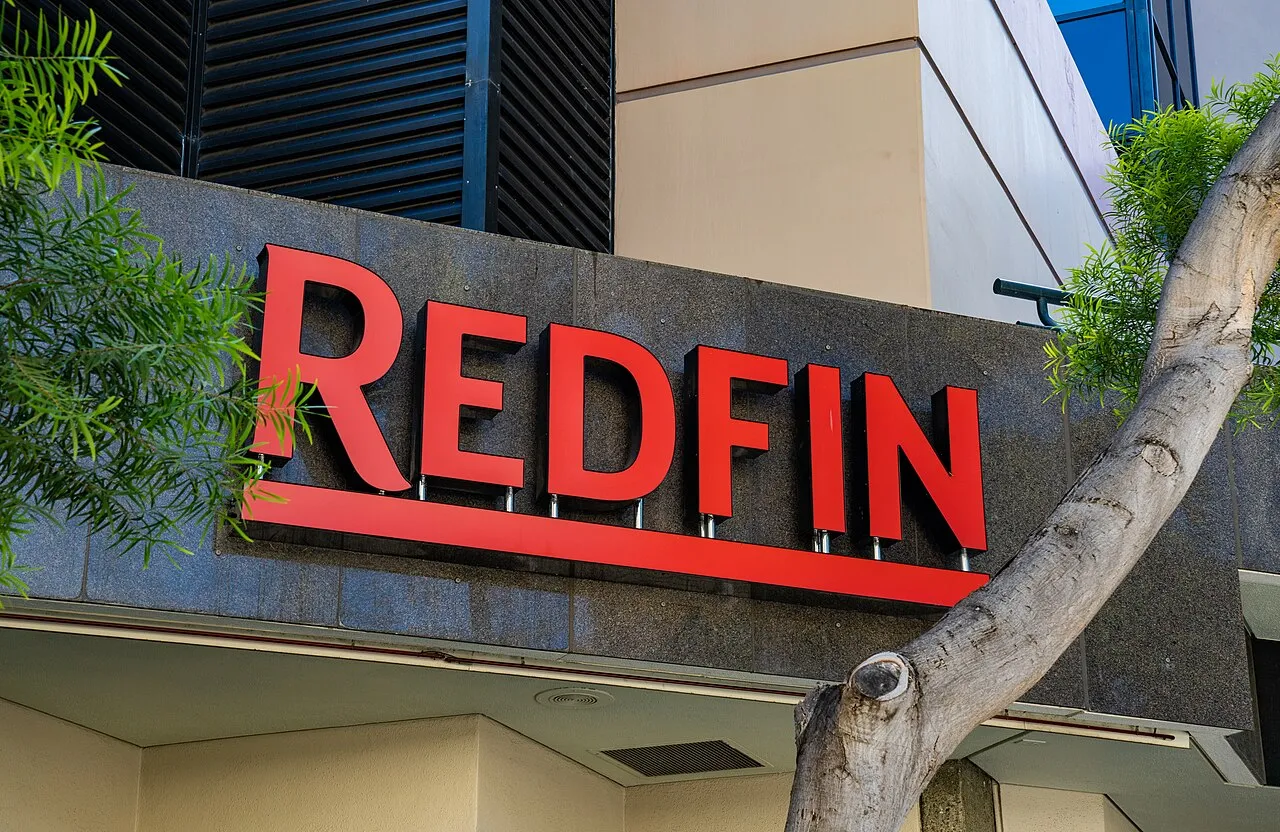
Two photographs of the brokerage business rather than of the founder, both supplied under Creative Commons licences. One is a storefront office and one is a fee-led office; the captions describe what is in each frame.

What to do with this before the next pitch
- Write down the founding facts before the founding story.The $1,000 loan and Ray Simone's 51 percent stake are checkable; the 1973 lawsuit episode is not traceable to any publication.
- Quote the 2001 sale as a range.About $65 million, $66 million and $70 million are all reported for one transaction, and no filing settles it.
- Copy the compression in "1 BR Plus Den: 340".Business Insider records 80 calls the next morning, and the ad carried the property, the difference and the contact route in one line.
- Label the 2002 figure as an estimate.Encyclopedia.com records $4.2 billion of property sold, and the word estimate is part of the number.
- Use the position, not the myth."I'm a marketing person, not a real-estate person" is the sentence New York Magazine recorded, and a brokerage can adopt it honestly.
Sources
- Corcoran Group, Inc. — Encyclopedia.com company history, accessed October 2026
- How Barbara Corcoran built the Corcoran Group — Business Insider, 25 November 2017
- Corcoran sells out to giant group NRT; will Barbara stay? — Observer, October 2001
- Barbara Corcoran on marketing and real estate — New York Magazine
Photo credit: Philip Romano · CC BY-SA 4.0