
“A logo shop sells a mark. A branding agency sells the research, the arbitration between stakeholders and the governance that keep a mark alive. Here is what that difference costs, using published figures rather than adjectives.
What the invoice actually buys
The distance between a logo shop and a branding agency is not taste. It is the number of rooms the work has to survive before it ships.
What the fee above a drawing buys is research, arbitration between stakeholders, applications designed for scale and rules that outlast the people who approved them. The figures below come from the organisations that publish them.
The rooms a logo shop does not have
A small studio that sells marks is usually honest about what it does. One or two designers work for a few weeks, three routes are presented in a single meeting, one round of revisions follows, and the handover is a mark, a palette, a typeface and a PDF. Nothing about that process is dishonest, and for a young company with one product and one decision-maker it is often the correct purchase.
A branding agency is set up to run a different sequence. It interviews the people who sell, service and invoice under the brand, audits what already exists in the market, decides whether the new identity should carry the parent name at all, and then designs the conditions for the mark: motion, digital tokens, templates, print specifications and an approval path. Landor describes its own offer as three connected disciplines, consulting, design and experience, and reports roughly 1,300 people across 30 locations as part of WPP. That headcount is the point of the comparison, and it is a company claim rather than an audited figure.
What each kind of firm is actually built to run
A branding agency is staffed for
- Interviews with the people who will have to use the identity after the launch
- An audit of live applications, from vehicle livery to invoices and app store listings
- Architecture and naming decisions that have to survive a trademark search
- Motion, digital tokens and component work, not only static artwork
- Governance: who approves, who may extend the system, what is locked
A logo shop delivers
- Three routes in one meeting and a single round of changes
- A mark, a palette and one or two typefaces, delivered as files
- No interviews with sales, service or operations
- No rollout plan for signage, print, packaging or product surfaces
- No rules, so each new supplier produces its own version of the brand
How the market measures a brand, and what those numbers are not
Interbrand publishes the entry requirements, and they exclude most brands
To appear in the Best Global Brands table a brand needs a substantial share of revenue earned outside its home region, geographic coverage in emerging markets, sufficient publicly available financial data, positive expected economic profit over the longer term, sufficient global awareness, and a Brand Strength Score of 50 or above.
Any comparison of two agencies that starts from this table is therefore a comparison of unusually large, unusually transparent businesses.
Brand Finance decides the number by royalty relief, not by sales
The published method states that it "determines the value a company would be willing to pay to license its brand as if it did not own it": expected future revenue attributable to the brand, multiplied by a royalty rate taken from a database of real licensing agreements.
Brand strength is compressed into a score out of 100 built from emotional connection, financial performance and sustainability, then applied to a sector royalty range. The worked example on the methodology page uses a range of 0 to 5 percent and a score of 80 out of 100.
Neither number is an audited financial fact
Brand Finance states that for owner-operated brands the royalty rate is purely hypothetical. Interbrand's table is a model with published criteria, not an accounting line. The two cannot be quoted interchangeably, because Interbrand excludes brands below a strength score of 50 while the royalty relief model applies to whoever is being ranked.
Use either figure the way you would use a valuation range in a sale: as an argument with a stated method, not as a balance sheet entry.
Almost nobody is paid on the value their work creates
The Association of National Advertisers found fee-based compensation in 75 percent of plans and value-based methods in less than 1 percent. Whatever the pitch deck says about sharing upside, the contract is usually a scope and a fee.
What a mark change moves inside a valuation model
Read the four figures above as evidence about method, not about merit. A rebrand can coincide with a collapse in estimated brand value without causing it, and a company that stays quiet for a year can rise. What the numbers do prove is that large organisations treat the brand as a managed asset with a number attached, which is exactly why the work around a mark is staffed by more than one person.
5.7billion dollars
Brand Finance's valuation of Twitter in January 2022
Brand Finance estimate, published before the rename.
673.3million dollars
The same estimate for 2024, after the rebrand
Brand Strength Index down 12.7 points to 56.9 out of 100. Brand Finance estimate.
53.0billion dollars
McDonald's, ninth in Interbrand's 2025 table
Interbrand, Best Global Brands 2025.
50.1billion dollars
Mercedes-Benz, tenth, down 15.0 percent year on year
Interbrand, Best Global Brands 2025.
The money, and the model behind it
If a fee-based model is nearly universal, the negotiation is not about commission percentages. It is about what is inside scope, how long the team stays on the account, and who pays when the work takes longer than expected. The 2010 ANA triennial survey remains the clearest published picture of the mix: fees in 75 percent of plans, sales commissions in 15 percent, traditional commissions down to 3 percent from 16 percent in 2006 and 2007, and value-based methods in less than 1 percent.
Brands consistently seek optimal ways to compensate agencies for the time, energy and creativity invested in their work.
The same survey found performance incentives in 46 percent of plans, but the split by size is more useful than the average: 70 percent of advertisers spending more than 30 million dollars a year used them with at least one agency, against 8 percent of those spending less. An incentive clause in a contract signed by a mid-sized developer is therefore unusual, and a consultant who leads with it may be selling you someone else's structure.
The compensation mix in one table
| Method | Share of plans | What it means in practice |
|---|---|---|
| Fee-based | 75 percent | A scope and a price, usually with agreed team roles |
| Sales commission | 15 percent | 41 percent among packaged-goods marketers |
| Traditional commission | 3 percent | Down from 16 percent in 2006 and 2007 |
| Value-based | Under 1 percent | Almost never appears in a signed contract |
The labour behind the fee
Identity work is priced like a project and produced like employment. That tension explains most arguments about cost. In the United States, the median annual wage for graphic designers was 62,960 dollars in May 2025, with the lowest tenth below 39,520 and the highest tenth above 104,910, against 50,980 dollars for all occupations. Art directors, who sign off visual systems and usually sit in the room when stakeholders disagree, had a median of 114,850 dollars.
Art director, median annual wage
114,850 dollars, United States, May 2025. Bureau of Labor Statistics.
Graphic designer, as a share of that figure
62,960 dollars median, against 50,980 dollars for all occupations. Bureau of Labor Statistics, May 2025.
These are wages, not fees. The multiple between them is where agency overhead, insurance, research, management and profit live. A buyer who understands the two figures can ask a sensible question in a pitch: how many people, at what seniority, for how many weeks, and who covers the difference when the work runs long.
Where the extra fee actually goes
Four activities separate a system from a mark, and each one has a cost. The first is arbitration: interviews and workshops that force the founder, the sales director and the head of operations to agree on what the brand is promising, before a designer has drawn anything. The second is the applications audit, which replaces "we need a new logo" with a list of what exists, what is broken and what has to be rebuilt.
The third is system design: the digital expression, motion, templates and rules that allow a marketing team to produce work without a designer in the loop. The fourth is enablement, which most contracts omit. Without a record of decisions, a named approver and a way for suppliers to request an extension, the system degrades into whatever the next printer, developer or regional office decides it should be. Interbrand describes its own framework as showing how a brand contributes to growth today together with a roadmap of activities for tomorrow. That roadmap is the thing a logo shop cannot produce.
Two paths, compared honestly
Commission a mark
One product, one decision-maker, no franchisees and no plan to expand the offer within two years.
Commission a system
Several audiences, external suppliers, regulated markets, or a pipeline that will be sold under the same name for a decade.
Buy the mark, and accept the work it creates for you: you will brief every supplier yourself, approve each application by eye, and carry the risk that two agencies produce two different brands in the same quarter. Budget for that coordination honestly, because it is real labour even when it is unpaid.
Buy the system, and you are paying for agreement as much as for artwork. Insist on the four artefacts that make the fee worthwhile: the research record, the audit, the digital rules and the decision log with named approvers. If a proposal cannot describe those, it is a mark with a longer timeline.
What a brand has to survive in the real world
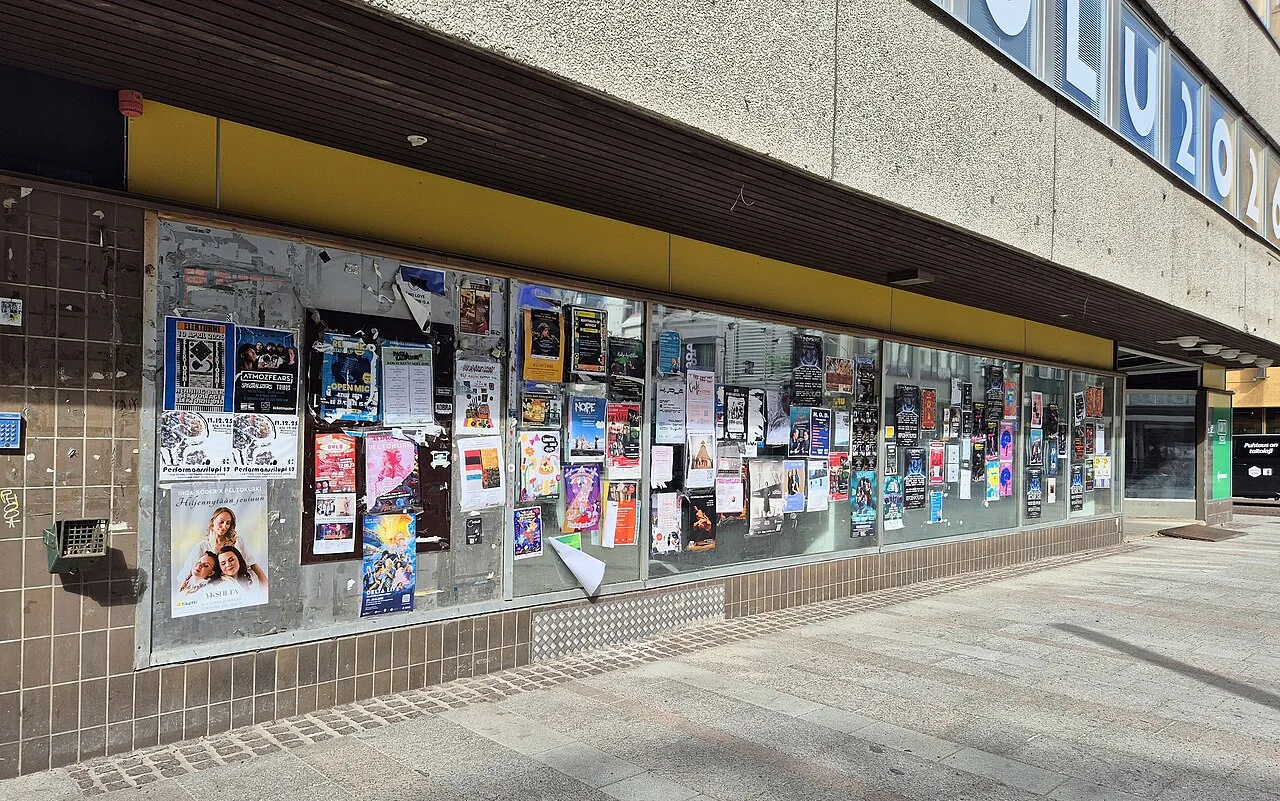
Judging identity work from a presentation is unreliable, because a facade at dusk, a poster wall and a row of shopfronts all test different things: contrast at a distance, legibility at speed, and the ability to sit beside competitors without disappearing. Photographs of live streets are a fairer reference than a mockup on a laptop.


What you should own after handover
Ask for eight artefacts. Master artwork in every production format, including the reversed and single-colour versions. Colour definitions for screen, offset, digital press and paint. Type specification with licensed fonts and fallbacks. A template library that a non-designer can actually use. Image direction with examples and counter-examples. Voice rules with two rewritten lines rather than adjectives. An approval map with names and response times. And a decision log that records what was rejected and why.
The last two are what make the difference durable. Design Council's Design Economy programme exists because governments also treat design as measurable economic activity, not decoration, and large brands behave the same way. If a proposal does not promise those artefacts in writing, you are buying a mark and then paying a second supplier to build the system you thought you had bought.
What to do with this on Monday
- Ask which organisations publish brand value, and which criteria you fail.Interbrand requires a Brand Strength Score of 50 or above and substantial revenue outside the home region, so most companies never appear at all.
- Check the method before you accept a number.Brand Finance values a brand by royalty relief, which its own page calls purely hypothetical for owner-operated brands.
- Price the missing artefacts, not the drawing.Research, applications audit, digital rules and a decision log are the four things a logo shop does not produce.
- Anchor fee conversations in salary reality.In May 2025 the median graphic designer earned 62,960 dollars a year and the median art director 114,850 in the United States.
- Name the person who approves.Three-quarters of advertiser plans are fee-based; without a named approver the fee buys versions instead of decisions.
- Write the governance into the contract.Ask for the decision log and the review times before the first presentation, not after the second.
Sources
- Best Global Brands — Interbrand, 2025 table and entry criteria
- How We Value the Brands in Our Annual Rankings — Brand Finance methodology
- The decline of X: Musk's rebrand wipes billions in brand value — Brand Finance
- ANA survey finds fees persist as dominant method of agency compensation — Association of National Advertisers
- Graphic Designers — Occupational Outlook Handbook, US Bureau of Labor Statistics
- Design Economy — Design Council, United Kingdom
- Landor — studio profile and disciplines (company claim)